
Health Agenda
Knee pain treatment: When to see a physio and what to expect
Published August 2026 | 5 min read
Expert contributor: Katie Morris, exercise physiologist and HCF Health Coach
Words by Angela Tufvesson
Key takeaways
- If you have long-term knee pain associated with osteoarthritis, you might be eligible for one of HCF’s joint health programs.
- Knee pain is common in Australia, with knee osteoarthritis being a major cause.
- When to see a physio for knee pain? If symptoms persist or limit movement.
- Physios can create exercise-based knee pain treatment plans.

Knee pain that won’t go away? A physio can help with knee pain treatment, identify the cause and recommend exercises to support your recovery.
Knee pain is common, and more than 1.9 million Aussies live with knee osteoarthritis, which is one of its leading causes.
You might initially try treating knee pain with an ice pack, rest or over-the-counter pain relief. But there can come a time when at-home knee pain treatment isn’t enough and it’s time to seek professional help.
A physio can assess your knee pain, try to identify what’s causing the pain and guide you through exercises and treatments designed to provide knee pain relief.
When to see a physio for knee pain
Common symptoms of knee pain can include swelling or stiffness of the joint, deformity, pain at night or at rest, loss of mobility – being unable to fully bend or straighten the knee – and weakness of the knee joint. “Knee pain can be caused by a number of different factors including trauma, overload or degenerative conditions,” explains Katie Morris, an exercise physiologist and HCF Health Coach.
If your knee pain doesn’t improve or is impacting your mobility, Katie says it can be a good idea to see a physio, who can help to rule out any serious conditions, determine what may be causing your pain and provide exercises to help provide knee pain relief.
She recommends seeing a doctor if:
- you can't move your knee or it’s very painful
- your knee swells after activity
- you can’t put any weight on your knee
- your knee feels unstable or like it’s ‘giving way’.
Katie says that if the pain is the result of a severe injury or trauma – or you have a fever and a red, hot knee – go to an emergency department.
What does a physio appointment involve?
While there isn’t a single answer for how to fix knee pain, a physio can assess the underlying cause of your pain and create a tailored knee pain treatment plan. If you already have a diagnosis like osteoarthritis, your GP or specialist may also refer you to a physio to help manage your symptoms, reduce discomfort and increase flexibility and mobility.
Initial assessment
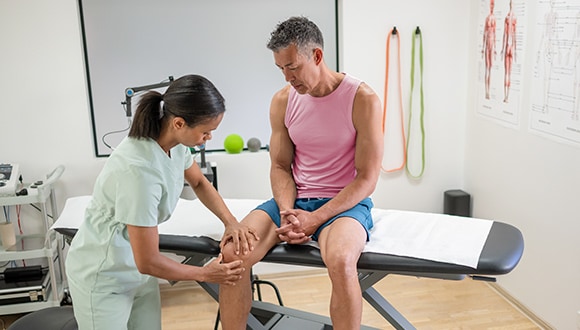
When you see a physio for the first time, they'll start with an initial assessment. “This may involve questions about your medical history, the history of your knee pain and the symptoms you’re having, as well as a physical examination of your knee and the way it’s moving,” Katie explains.
Exercises and movement
Once your physio has a better understanding of your knee pain, and perhaps a diagnosis, they may prescribe different exercises that start off quite simple and become more challenging as you become stronger.
“The exercises are usually to help strengthen the muscles that support the knee joint, improve the flexibility of the knee, improve balance and coordination, and reduce the risk of future knee injury,” says Katie.
Your physio will show you how to perform the exercises during your appointment and provide instructions for when and how often to do them at home. They may also provide hands-on treatment like mobilisation, massage, taping and bracing if needed.
Follow-up
You’ll need to follow up with your physio to check your progress and adjust your exercises where necessary. These appointments allow your physio to monitor how your knee is responding to treatment, as well as provide strategies to help avoid ongoing problems, Katie explains.
HCF extras cover includes physiotherapy. Eligible members who book with an extras provider in our No-Gap network get 100% back* on one initial consult per year with a physio, chiro or osteo. Use our Find a Provider tool to search for physios in your area.
Treatment options for long-term knee pain
It's important to remember that recovery depends on the cause of the pain, and a physio (and sometimes specialists) can help determine the most effective treatment approach. Common knee pain treatments can include the following.
- Dislocated kneecap or fracture: May require immobilisation, surgery and physiotherapy.
- Anterior cruciate ligament (ACL) tear: May require surgery and a lengthy rehabilitation program.
- Posterior cruciate ligament (PCL) tear: Often involves immobilisation followed by rehabilitation.
- Meniscus tear: Typically managed with rest and physiotherapy, but surgery may be needed.
- Chronic conditions like osteoarthritis: May involve a combination of pain medication, weight management, braces or other support devices, and exercises to improve knee mobility and strength. Advanced cases may require joint replacement surgery.
If you have long-term knee pain, you might be eligible for one of our physio-supported joint health programs^.
How John found support for his knee pain
HCF member John had been living with knee problems for some time when he learned about HCF No-Gap GLA:D® Knees Program^, an early-intervention program for people with knee osteoarthritis. The program combines group exercise sessions, education and a follow-up assessment, aiming to give participants long-term knee pain relief, improve strength and mobility and potentially avoid or delay knee replacement surgery+.
“The program itself was quite comprehensive – about an hour each time, with around 12 exercises focusing on the knee, hips and core,” says John, 78.
“Having the same physio throughout made a big difference, and they were very encouraging and knowledgeable. I’ve definitely gotten stronger in my core, legs and surrounding muscles.”
While John says the pain hasn’t completely gone away, his physio explains that as long as it remains at a manageable level, it’s important to keep moving. “That mindset really stuck with me,” he adds. “I’ve continued doing the exercises after the program.”
When does knee pain require a specialist or imaging?
If your knee pain has lasted longer than expected or isn’t getting better with treatment, you may need to see a specialist.
Katie says a specialist will consider your symptoms and medical history and perform a physical assessment. “This may include imaging such as X-ray or MRI to help guide their treatment recommendations,” she adds.
If osteoarthritis is causing your knee pain and an X-ray shows severe disease – and you’re also walking significantly reduced distances and frequently waking in the night due to pain – your doctor may recommend a knee replacement as a longer-term treatment option to consider. They can refer you to an orthopaedic surgeon who can perform the procedure.
Again, you can use our Find a Provider tool to locate participating No-Gap Joints orthopaedic surgeons and hospitals. Check your policy details or contact us to confirm your level of cover.
Eligible HCF members^ can also access a range of programs to help you manage pain, build strength, move more easily and prevent, delay or prepare for surgery.
- HCF No-Gap GLA:D® Knees Program: Gives you access to a GLA:D® recognised physio or exercise physiologist, who will assess your condition and deliver education and in-person exercise sessions to help you manage your osteoarthritis symptoms^.
- Osteoarthritis Healthy Weight for Life: Provides at-home weight management support# to help you reduce pain and improve movement in your hips and knees.
- HCF Health Coaching for Knee Osteoarthritis: Get personalised support from experienced health coaches to help improve knee osteoarthritis symptoms, mobility and quality of life, and connect members to evidence-based health programs**. Take our survey to see if this is right for you.
Looking for support with knee pain?
HCF Health Coaching helps eligible members** living with knee osteoarthritis take positive steps towards better mobility and wellbeing. Delivered online or over the phone by qualified health professionals, the program offers practical guidance and evidence-based support to help you manage your condition with confidence.
Related Articles
Knee surgery need-to-know
Knee replacement surgery can be life-changing, but it’s important to understand the costs. Here’s what you need to know.
5 exercises to reduce knee pain
These simple exercises can help support your knees, reduce knee pain and increase your sense of balance.
How to take care of your joints
Protecting your joints when playing sport can support your wellbeing at every age. Read our tips on caring for your joints while exercising.
Janet's no-gap knee replacement
After a fall left Janet in acute pain and needing knee replacement surgery, she discovered the benefits of our No-Gap Joints program.
Important Information
* 100% back at More for You program providers in our No-Gap network is available on selected covers. Waiting periods and annual limits apply. Our No-Gap network of healthcare providers changes often. Please check that your provider is part of our No-Gap network before you book or attend an appointment. See hcf.com.au/100back
^ Eligibility criteria apply. For more information, see hcf.com.au/joint-health-programs
+ Source: gladaustralia.com.au
# Eligible members must have held HCF hospital cover for 12 months and hospital cover for joint replacement surgery for a minimum of 2 months, have a Body Mass Index (BMI) of 28 and higher, and have knee or hip osteoarthritis. For more information, see hcf.com.au/hwfl
** Eligibility criteria apply. For more information, see hcf.com.au/health-coaching
This communication contains information which is copyright to The Hospitals Contribution Fund of Australia Limited (HCF). It should not be copied, disclosed or distributed without the authority of HCF. Except as required by law, HCF does not represent, warrant and/or guarantee that this communication is free from errors, virus, interception or interference. All reasonable efforts have been taken to ensure the accuracy of material contained on this website. It’s not intended that this website be comprehensive or render advice. HCF members should rely on authoritative advice they seek from qualified practitioners in the health and medical fields as the information provided on this website is general information only and may not be suitable to individual circumstances or health needs. Please check with your health professional before making any dietary, medical or other health decisions as a result of reading this website.
