
Health Agenda
How to manage social anxiety without alcohol
Published December 2025 | 6 min read
Expert contributor: Dr Sally Hunt, clinical psychologist, senior lecturer, the University of Newcastle, and Secretary of the Society for Mental Health Research
Words by Lucy E Cousins
Social anxiety affects around one in 10 Australians. If you’re one of them, here’s how to cope without relying on a drink.
If you’ve ever felt nervous before going out and been tempted to grab a drink for ‘Dutch courage’, you may have social anxiety.
It’s a common condition, with around 11% of Aussies experiencing it at some stage of their lives. While alcohol may seem like a good solution, it can lead to dependence and serious health complications. The good news is you can use simple strategies to calm your nerves for your next social event – and they don’t involve drinking.
What is social anxiety and how do you spot it?
Feeling nervous or uncomfortable in new situations or at social events is normal and a natural part of life, says Dr Sally Hunt, a clinical psychologist and senior lecturer at the University of Newcastle and Secretary of the Society for Mental Health Research. But with social anxiety, the feelings are excessive and they tend to last longer.
“Social anxiety is an anxiety disorder that is specific to social situations and is based on an intense fear of being judged, embarrassed or humiliated in social settings,” Dr Hunt explains.
This fear is so strong that people with social anxiety try to avoid social situations, she adds. In turn, this avoidance can affect other aspects of their life like relationships, work, school and life opportunities.
Although men and women can both experience social anxiety, research suggests women are nearly twice as likely to develop it. While symptoms vary from person to person, they can include:
- being overly self-conscious
- a racing heart
- sweating
- blushing
- shaking
- diarrhoea or loose bowels.
Before a social outing, Elizabeth, 40, says she experiences “butterflies” in her stomach and starts to sweat.
“I usually feel nervous before going out, even if it’s with my friends – and even if I’m the one who has organised the get together,” she says.
“I also have this intense desire to cancel and to stay at home, even though I know I’ll end up enjoying myself if I push myself to go out.”

The link between social anxiety and alcohol
Elizabeth’s go-to coping mechanism for a night out is to start with a little alcohol – either before she leaves the house (if she isn’t driving) or as soon as she gets there.
“My first drink is usually gone in seconds,” she says. “Then I can feel myself relaxing. I know it’s not the best but it’s a habit I’ve been trying to kick.”
Aussies are known to love a drink or two – even the Australian Government concedes drinking alcohol is entwined with many social and cultural activities in our country. Research suggests roughly 10% of Australian men and 3% of Australian women are drinking at very high-risk levels.
Dr Hunt says it's not surprising we sometimes turn to alcohol to treat feelings of nervousness before a social event, because drinking alcohol can initially reduce or numb the anxiety and help people cope. Alcohol creates a feeling of relaxation by temporarily enhancing the sedating effects of the gamma-aminobutyric acid (GABA) receptor and inhibiting glutamate – a chemical messenger in our brain – while also providing a short energy boost.
“Unfortunately, this calm is only temporary,” says Dr Hunt. “Over time, a vicious cycle is established where you drink to feel relaxed then experience the depressive effects of alcohol where you become more self-conscious and self-critical. If you drink more, this cycle is strengthened.”
The next day you might also feel embarrassed or regretful about your behaviour at a social event. This is known as ‘hangxiety’, which can be stressful and add to your general anxiety.
“When we pull this all together, a worrying pattern emerges where some people drink to cope and then drink more hazardously,” says Dr Hunt. “Not only do the social anxiety symptoms intensify, but the person may also have new health, emotional and life problems that arise from drinking.”
The long-term mental health effects of alcohol can include:
- alcohol dependence or addiction
- depression and anxiety
- social dysfunction
- cognitive impairment
- self-harm (including suicide).
Alongside these mental health risks, there are major physical health risks. Alcohol is known to increase the risk of developing cancer and has also been linked to a higher risk of dementia and stroke. It can also affect fertility and testosterone levels in men.
7 ways to manage social anxiety without alcohol
While you may think alcohol makes you feel more relaxed in social situations, Dr Hunt recommends trying these evidence-based strategies instead to help manage anxiety.
1. Try cognitive behavioural therapy
This type of therapy helps you identify and challenge irrational thoughts, gradually face feared situations and develop healthier coping mechanisms. Eligible HCF members can get cover for a range of evidence-based online treatment programs through THIS WAY UP*, a not-for-profit initiative developed by experienced psychiatrists and clinical psychologists to help you take control of your mental wellbeing.
2. Calm your mind
Mindfulness can help you settle your thoughts and reduce anxiety. Doing a simple ‘body scan’ (where your mind visits each part of your body) or calming your mind through meditation are great ways to improve stress levels before an event.
3. Visualise your next event
Visualisation, like concentrating your mind on positive images, can help reduce feelings of anxiety. Before your next social event, try a guided visualisation or simply walk yourself through the event in your mind in a positive manner.
4. Check your self-talk
What we say to ourselves can affect our anxiety levels. Unhelpful self-talk might include things like, “I’m going to be terrible at this”. Anxiety and excitement can often feel very similar, so shift your mindset and try saying, "I’m a little nervous – and excited – for tonight”.
5. Practise breathwork
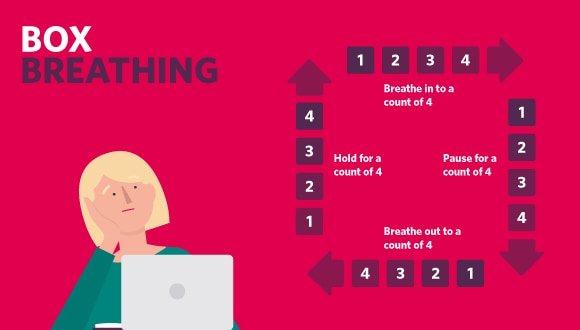
Studies show focusing on your breathing can help reduce heart rate and improve your mood. Try square breathing (also known as box breathing): breathe in for 4 seconds, hold for 4 seconds, breathe out for 4 seconds, then hold for 4 seconds. Repeat this three or four times. Putting your hands on your belly will help you focus on your breathing.
6. Focus on your general health
Regular exercise, eating well, getting enough sleep and other healthy behaviours can help manage anxiety, so it’s important to maintain these positive lifestyle habits – plus avoid using alcohol, tobacco and other drugs to cope when things get tough.
7. Find your community
If you want support to change the way you drink on social occasions, it can be helpful to find others with the same idea. The Daybreak app connects you anonymously with an online peer community to help you change your relationship with alcohol. It also includes a drink tracker, so you can consciously monitor and reduce your drinking habits over time. Eligible HCF members can also get referrals to additional mental health support through Daybreak^.
When to get help for social anxiety
Not sure if you should seek help from a professional health expert? Dr Hunt recommends asking yourself the following questions.
- Is your drinking getting in the way or disrupting other aspects of your life?
- Does it cause relationship stress?
- Have you missed work, school or other important responsibilities because of drinking or being hungover?
- Have you done things while drinking that you regret?
If the answer is yes to any of these questions, it might be time to seek support. A good first step is to speak with your GP. Eligible HCF members can also get a free annual HealthyMinds Check-in* with a registered psychologist online or book an online GP consultation+ with GP2U.
Find more help for alcohol support, counselling and information:
If you need crisis support, call Lifeline on 13 11 14 or visit lifeline.org.au. For immediate support, call 000.
Book a mental health check
Are you experiencing signs of anxiety and think it might be time to speak with a professional? Eligible members can get a free annual HealthyMinds Check-in with a registered psychologist online, with appointments available with your chosen psychologist up to 21 hours a day*.
related articles
How alcohol affects sleep
Discover how alcohol affects sleep, its long-term impact on sleep quality and the health risks you should know about.
What causes anxiety disorder?
Anxiety is the most common mental health condition in Australia: understanding what causes it can be the first step in changing the impact it has on your life.
How to manage anxiety
When anxiety hits it can be paralysing. Here are some techniques to help manage anxiety and stress so you feel more in control.
Help for substance use disorder
Substance use disorder is the third most common type of mental disorder in Australians aged 16 to 85. Seeking help can feel daunting, but support is available.
IMPORTANT INFORMATION
* Eligibility criteria apply. For more information, see hcf.com.au/mental-support
^ For more information, see hcf.com.au/daybreak
+ Eligibility criteria apply. For more information, visit hcf.com.au/gp2u
This communication contains information which is copyright to The Hospitals Contribution Fund of Australia Limited (HCF). It should not be copied, disclosed or distributed without the authority of HCF. Except as required by law, HCF does not represent, warrant and/or guarantee that this communication is free from errors, virus, interception or interference. All reasonable efforts have been taken to ensure the accuracy of material contained on this website. It’s not intended that this website be comprehensive or render advice. HCF members should rely on authoritative advice they seek from qualified practitioners in the health and medical fields as the information provided on this website is general information only and may not be suitable to individual circumstances or health needs. Please check with your health professional before making any dietary, medical or other health decisions as a result of reading this website.
