
Health Agenda
Lower back pain exercises: Habits to prevent and manage pain
Updated July 2026 | 5 min read
Expert contributor: Dr Kevin Wernli, physiotherapist, Australian Physiotherapy Association
Words by Trudie McConnochie
Key takeaways
- Ongoing lower back pain usually isn’t caused by an injury or structural problem.
- Staying mobile and active can help prevent back pain recurring.
- Most cases of lower back pain will clear up with time, especially when treated with movement and stretches for lower back pain.

What’s the fastest way to fix lower back pain? An expert shares evidence-based tips, healthy habits and five lower back pain exercises to help ease discomfort.
You’ve had this before – an ache or stiffness in your lower back that flares up, settles, then returns – and this time you want to break the cycle. So, what can help? Basic lifestyle habits like moving more and stretching regularly, as well as gentle lower back pain exercises like spine twists and forward folds, can all help reduce discomfort and support your lower back.
Spokesperson for the Australian Physiotherapy Association Dr Kevin Wernli, who has a PhD in back pain, says it’s common for people to have ‘episodic back pain’ not related to an injury – especially between the ages of 35 and 55.
He says 85 to 90% of back pain cases have no clear physical cause and are classified as ‘non-specific lower back pain’. “So, there’s only a very small percentage that are specific from nerve compression, fractures, infections and those sorts of things.”
In the majority of cases, lower back pain will heal by itself.
“It’s very rare for it not to go away within a few weeks,” says Dr Wernli.
Why your lower back keeps flaring up
For non-specific lower back pain, contributing factors include:
- being sedentary
- heavy physical work or other activities that involve frequent twisting, bending and lifting (especially if you’re not conditioned for them)
- being overweight.
“Conditions like endometriosis can cause back pain as well,” Dr Wernli adds.
Where lower back pain causes are known, the most common include:
- inflammatory conditions like rheumatoid arthritis
- spondylolisthesis (when one of your vertebrae slips out of alignment)
- disc herniation (when a spinal disc bulges or ruptures) with nerve compression
- spinal fractures
- medical issues like cancer or spinal infections.
People sometimes blame back pain on sciatica, which occurs when something presses on your sciatic nerve or its nerve roots in your spine. But Dr Wernli says sciatic nerve pain usually shows up in the legs.
“It’s not a cause of back pain, but people can get leg pain if there is compression of the nerve in the back.”
6 daily habits that protect your lower back
Lifestyle factors play a big role in lower back pain prevention, says Dr Wernli. In fact, if you’re experiencing back pain that isn’t linked to an obvious cause, it might be your body trying to tell you something.
“It can be a warning system of, ‘I’ve got to make sure I exercise more’ or ‘I’ve got to get more sleep’,” he says.
Dr Wernli recommends these steps to help protect your lower back against future pain episodes:
- Prioritise sleep. Poor sleep makes the brain’s pathways to pain more sensitive. Practise good sleep hygiene, including going to sleep at the same time each night and waking at the same time each morning. Let your body unwind in the hour before sleep (away from devices).
- Manage stress. Relaxation techniques like mindfulness can help ease tension in the back.
- Move more. Being active keeps your back strong. Adults aged 18 to 64 should aim to do at least 150 minutes of moderate to vigorous physical activity across five days of the week. Speak to your doctor before changing your exercise routine.
- Stretch your body. “We’re not designed to be sitting for long periods of time,” says Dr Wernli, so practise lower back stretches regularly. “We don’t have any strong evidence that any particular stretches are better than any others. How much you do seems to matter more than what you do.”
- Condition your body. If you have a manual job, condition your body for it with the guidance of a trainer or physio.
- Quit smoking. A large 2023 study found quitting smoking reduced the occurrence of back pain.
Lower back stretches and exercises to try today
What’s the best exercise for lower back pain? There’s no single best exercise for everyone. Gentle movements like knee rocks, spine twists and child’s pose can help improve mobility and reduce stiffness.
If you have a back condition or you're new to exercise, talk to your doctor or exercise physiologist before starting these exercises.
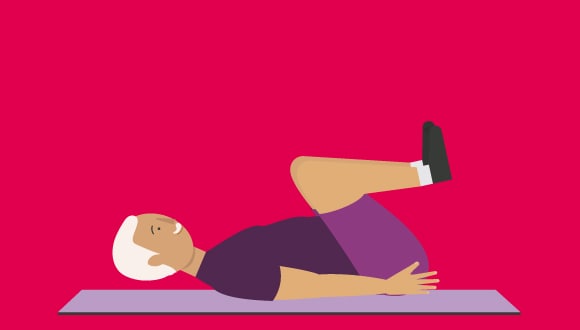
Knee rocks
- Step 1: Lie on your back with your arms at your side.
- Step 2: Bend your knees and bring them to your chest.
- Step 3: Keeping your knees together and your back on the floor, gently rock your legs from one side to the other for 2 minutes.
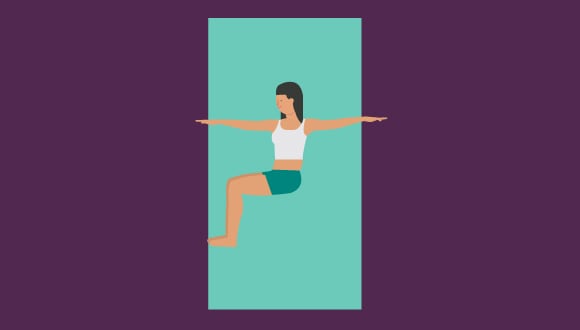
Spine twists
- Step 1: Lie on your back with your arms at your side.
- Step 2: Bend your knees, bring them to your chest, then turn your knees gently towards the floor on the right. Hold for three breaths.
- Step 3: For a deeper stretch, straighten your right leg. Extend your arms out from each shoulder and turn your face to the left. Hold for three breaths.
- Step 4: Bring your knees back to the centre then repeat on the left side.
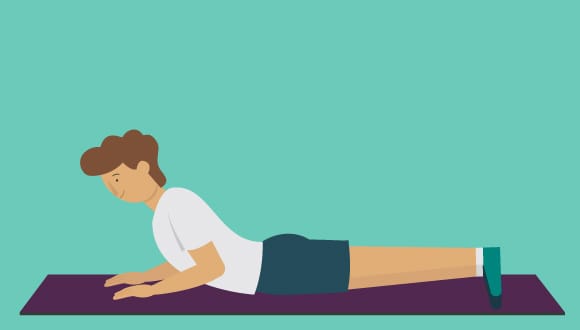
Cobra
- Step 1: Lie on your stomach with your arms bent and hands near your head.
- Step 2: Using your arm muscles to push against the floor, bring your upper body upwards, keeping your chest proud and shoulders down.
- Step 3: When you feel the stretch, hold for six breaths.
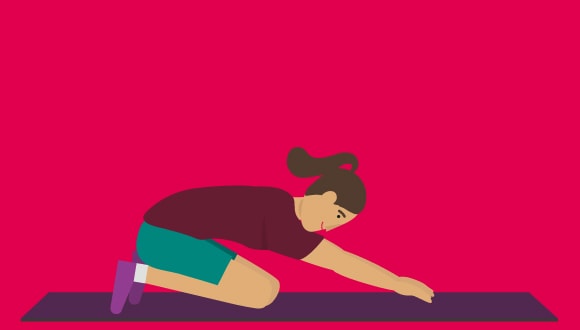
Child’s pose
- Step 1: Kneel on the floor with knees hip-width apart and sit down on your legs.
- Step 2: Without moving your bottom, reach forward along the floor with your torso and arms, until your forehead is on, or near, the floor.
- Step 3: Breathe slowly in and out for six breaths.
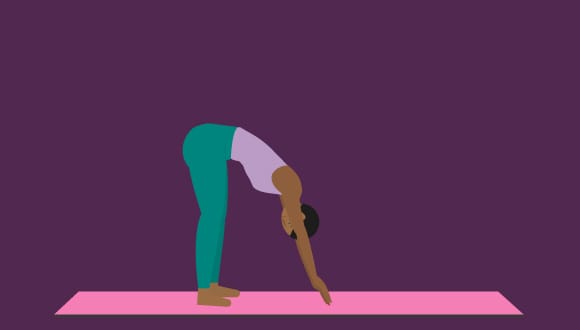
Forward folds
- Step 1: Stand with your feet hip-width apart and arms at your side.
- Step 2: Bend your knees slightly and slowly roll your spine towards the floor, starting with your head, getting your hands as close to the floor as you can.
- Step 3: Hang for five breaths and straighten your legs if you can.
- Step 4: Slowly reverse the movement, starting by lifting your lower back, to return to standing.
These simple back-strengthening exercises can also help keep your spine strong and support injury and pain prevention.
When to stop managing it yourself
Most cases of lower back pain can be managed at home, but if you need support, have an underlying medical condition or the pain is not getting better, Dr Wernli recommends seeing a physio.
“If you lose control of your bladder or bowel, or you have numbness around your groin, or you have changes in your sensation when you’re wiping [after using the toilet], that is a medical emergency and needs to be seen very urgently,” he adds.
How your HCF cover helps you manage back pain
HCF members who need help managing back pain can access extra support.
- HCF’s Chronic Lower Back Pain Support is a dedicated program for members looking for help to manage lower back pain and improve mobility. Take the survey to see if you’re eligible*.
- Use our Find a Provider tool to find a healthcare professional in our No-Gap network and get 100% back^ on one initial consult or first visit to a physio or chiro per year.
- If your physio has recommended an exercise or gym program to treat a medical condition like arthritis or osteoporosis, you may be able to claim towards the cost with HCF under eligible extras cover. Ask your doctor, physio or other allied health provider to fill in the exercise and gym benefits form.
Get 100% back on popular extras
Need to book an appointment with a physio? You can get 100% back^ on a range of preventive and diagnostic extras through HCF's No-Gap network, like one initial consult with a physio, chiro or osteo per year. Our No-Gap network has over 17,000 participating provider locations, helping you access care with less worry about bills.
Related articles
Science-backed pain relief
Chronic pain can affect your sleep, mental health and relationships. Understand what causes pain and get expert advice on the different methods of pain relief.
Why core strength matters
A strong core can help to reduce the risk of lower back pain, improve your balance and help you with everyday activities. Here’s how you can build core strength.
Making time for exercise
Carving out time to hit the recommended daily amount of exercise doesn’t have to be challenging. Here’s how to build your endurance up every week.
Is walking a workout?
Walking can be a powerful and accessible way to stay fit and healthy, no matter your age. These five tips will help you make your daily hike even more effective.
IMPORTANT INFORMATION
* Eligible members must have held hospital cover for 12 months (excluding Accident Only Basic and Overseas Visitors Health Cover). Clinical eligibility criteria also apply. See hcf.com.au/health-coaching
^ 100% back at More for You program providers in our No-Gap network is available on selected covers. Waiting periods and annual limits apply. Our No-Gap network of healthcare providers changes often. Please check that your provider is part of our No-Gap network before you book or attend an appointment. See hcf.com.au/100back
This communication contains information which is copyright to The Hospitals Contribution Fund of Australia Limited (HCF). It should not be copied, disclosed or distributed without the authority of HCF. Except as required by law, HCF does not represent, warrant and/or guarantee that this communication is free from errors, virus, interception or interference. All reasonable efforts have been taken to ensure the accuracy of material contained on this website. It’s not intended that this website be comprehensive or render advice. HCF members should rely on authoritative advice they seek from qualified practitioners in the health and medical fields as the information provided on this website is general information only and may not be suitable to individual circumstances or health needs. Please check with your health professional before making any dietary, medical or other health decisions as a result of reading this website.
