
Health Agenda
5 back-strengthening exercises to prevent pain
Published June 2026 | 4 min read
Expert contributor: Jacci Allanson, accredited exercise physiologist
Words by Trudie McConnochie
Key takeaways
- Keeping your back strong can lower the likelihood of pain and injury.
- Regular back-strength workouts help stabilise the spine and the muscles that support it.
- You can do the five back-strengthening exercises (see below) at home.
- See your GP or an exercise physiologist for guidance.

Keeping your spine strong can prevent injury and pain. These simple back-strengthening exercises will help set you straight.
Your spine helps you twist, bend and walk, and protects your nervous system, which means it plays a big role in keeping you healthy and moving. But for around 4 million Aussies living with back problems, everyday activities can be very challenging.
When it comes to keeping your back healthy, regular back-strengthening exercises can go a long way towards preventing injuries and pain.
Common causes of back pain
While back pain is common, in around nine out of 10 cases, it’s not related to a serious medical condition. Common causes of back pain include:
- osteoarthritis or inflammatory arthritis (e.g. ankylosing spondylitis)
- bone fractures
- herniated disc
- mental health conditions like anxiety and depression
- injuries like sprains and strains
- being overweight or obese
- lifestyle factors like stress, smoking and inactivity
- bad sleep
- unusual increases in load, e.g. from lifting heavy objects.
Why back-strengthening exercises are important
Staying active can play a big role in preventing and managing back pain. A Macquarie University study found adults with a history of low back pain lasted nearly twice as long without the pain reoccurring if they walked regularly – 208 days compared to 112 days for people who didn’t exercise.
Doing back-strengthening exercises can make a big difference to your back’s mobility at every age, says accredited exercise physiologist Jacci Allanson.
“The back is central to everything,” she says. “From our tiny intervertebral muscles all the way up to our big latissimus dorsi and erector spinae muscles, the stronger they are, the more resilient they are, the more load they can take and the less chance we have of injuring ourselves.”
5 back-strengthening exercises
Jacci recommends the following five back-strengthening exercises to keep your spine strong. Start slowly, building up to three sets of eight to 15 reps for each exercise, stopping if you feel pain.
“You want to feel like you’ve only got a few reps left in the tank,” Jacci advises. “So, if you did 10 reps and you feel like you could probably do three more before you couldn’t do any more, that’s the upper limit of what I’d recommend doing at home.
“People often say, ‘I'm not getting a sweat on because I’m not moving fast enough’, but that’s not the point of strength training,” she adds. “You want to feel the muscles working, not the heart thumping.”
If you have a health condition or you’re new to exercise, talk to your doctor or exercise physiologist before starting this back-strength workout.
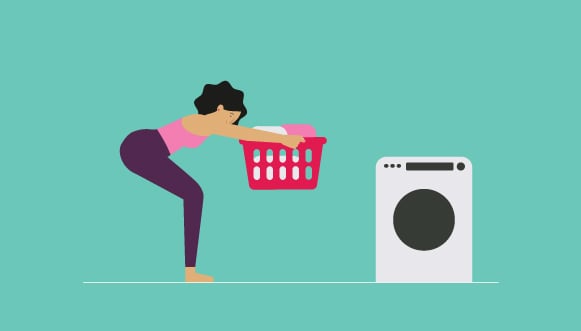
1. The hip hinge
Why it’s good: It teaches you to bend from your hips instead of your spine and builds lower-back strength by working your glutes. Keep the weight light, increasing it as you get stronger.
Directions:
- Step 1: Grab a laundry basket full of wet towels or pantry items and hold it in front of you.
- Step 2: Stand with feet shoulder-width apart, knees slightly bent, and hinge from your hips to place the basket on the ground, keeping your torso straight.
- Step 3: Stand back up with the basket, driving through your feet and squeezing your bottom. Repeat.
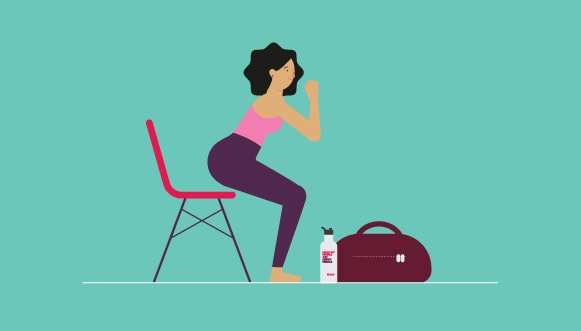
2. The squat
Why it’s good: It stabilises your spine by building strength in your glutes, hamstrings, and quad and core muscles. It also helps keep your hip and knee joints mobile, to take the strain off your back.
Directions:
- Step 1: Stand just in front of a sturdy chair with your feet shoulder-width apart.
- Step 2: With a straight back, bend your knees and lower your bottom towards the chair.
- Step 3: When your bottom just touches the chair, push through your heels to stand back up, keeping your back straight. Repeat.
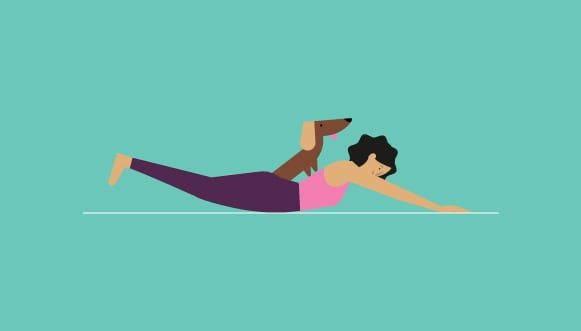
3. The arch-up
Why it’s good: It activates and strengthens the spinae erector muscles, which run the length of the spine.
Directions:
- Step 1: Lie on the ground facing downwards with arms straight out in front of you.
- Step 2: Lift your chest up off the ground using your core but not your hands. Keep your head neutral.
- Step 3: Lower slowly then repeat.
Optional: While raising your chest, lift your legs off the ground while contracting your abs to perform a ‘Superman’ exercise. Lower both simultaneously. If you feel pain in your lower back, stop immediately.

4. Side bends
Why it’s good: This lower-back strength exercise also works the core muscles (specifically the obliques or side abdominal muscles) for added spinal strength. Once again, start with a lighter weight and increase as your strength builds.
Directions:
- Step 1: Grab two grocery bags filled with items of roughly equal weight.
- Step 2: Holding a bag in each hand, stand with legs shoulder-width apart. Without bending your knees, bend to the left slowly until that bag almost touches the floor.
- Step 3: Slowly return to standing. Repeat on the right side.
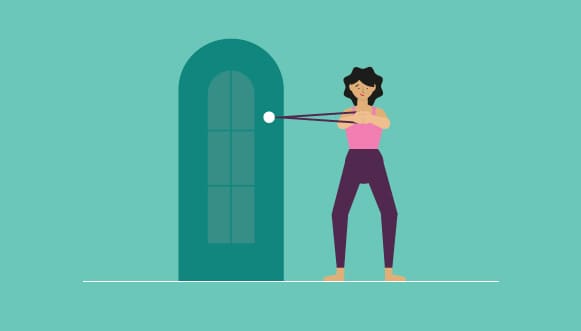
5. The Pallof Press
Why it’s good: It builds core strength to help your spine rotate easily. You’ll need a resistance stretch band (available from department stores for around $10).
Directions:
- Step 1: Tie one end of a resistance band to something sturdy at chest height. A door handle is ideal.
- Step 2: Holding the loose end against your chest in both hands, stand to the right of the band far enough away so the band is taut. Feet should be hip-width apart and knees slightly bent.
- Step 3: With straight arms, slowly stretch your hands forward, without twisting your body, until they're directly in front of you, then slowly return to the start position.
- Step 4: Do a full set (8 to 15 reps) then repeat on the left side.
Get support for lower back pain
Is persistent lower back pain making everyday tasks feel harder than they should? If you’re an HCF member looking for support to manage your lower back pain and improve your mobility, our personalised health coaching program could help improve your physical and emotional wellbeing. Take our 5-minute survey to see if you’re eligible^ for HCF's Chronic Lower Back Pain Support program.
Related articles
Hip pain: Causes and treatment
Hip discomfort is common, and understanding the most likely causes can help you manage symptoms and stay active.
Joint care during exercise
Protecting your joints when playing sport can support your wellbeing at every age. Read our tips on caring for your joints while exercising.
Science-backed pain relief
Everything you need to know about pain and all the options for relief.
How to exercise over 50
Ready to start moving but not sure how? Use these tips to help make the most of exercise over 50 and beyond.
Important information
^ Eligible members must have held hospital cover for 12 months (excluding Accident Only Basic and Overseas Visitors Health Cover). Clinical eligibility criteria also apply. See coach.hcf.com.au/fs/low_back_pain
This communication contains information which is copyright to The Hospitals Contribution Fund of Australia Limited (HCF). It should not be copied, disclosed or distributed without the authority of HCF. Except as required by law, HCF does not represent, warrant and/or guarantee that this communication is free from errors, virus, interception or interference. All reasonable efforts have been taken to ensure the accuracy of material contained on this website. It’s not intended that this website be comprehensive or render advice. HCF members should rely on authoritative advice they seek from qualified practitioners in the health and medical fields as the information provided on this website is general information only and may not be suitable to individual circumstances or health needs. Please check with your health professional before making any dietary, medical or other health decisions as a result of reading this website.
