
Health Agenda
Insulin resistance symptoms to know – and how to get help
Published September 2026 | 7 min read
Expert contributor: Associate Professor Anthony Dear, Diabetes Clinical Trial Researcher, Monash University’s Eastern Health Clinical School
Words by Trudie McConnochie
Key takeaways
- Insulin resistance occurs when there’s a breakdown in the body’s ability to handle the hormone insulin.
- Often there are no symptoms, but sometimes there can be signs associated with insulin resistance.
- The condition can lead to pre-diabetes and type 2 diabetes.
- Eligible members can access programs and tools like the CSIRO Total Wellbeing Diet and The COACH Program® for support managing their wellbeing.

You’re beyond tired and sometimes after eating you feel like you need to lie down. There are patches of darkened skin on your body. An online search tells you these could be insulin resistance symptoms, but there’s also a long list of other possibilities. So how can you tell?
Find out what insulin resistance is, how to know if you might have it and when to see your doctor.
What is insulin resistance?
Insulin is a hormone made by your pancreas to help move glucose into your cells, to be used for energy. Insulin resistance can develop when cells don’t respond effectively to this process – a condition that is believed to affect more than a quarter of the population.
“Insulin resistance is where the receptor for insulin on the cell surface is unfortunately blocked, resulting in glucose not being allowed into the cell,” explains Associate Professor Anthony Dear, Diabetes Clinical Trial Researcher at Monash University’s Eastern Health Clinical School. “The beta cells in the pancreas recognise this is a problem and try to overcome it by increasing insulin production, even though the cells are unable to use the insulin to process glucose.”
This can lead to higher blood sugar levels and eventually to pre-diabetes and then type 2 diabetes – but lifestyle changes can help stop this progression.
What causes insulin resistance?
Insulin resistance occurs most commonly in metabolic syndrome, a group of health issues that can lead to heart disease, stroke, diabetes or chronic kidney disease. Risk factors for metabolic syndrome are:
- high blood pressure
- excessive weight around the waist
- low levels of good (HDL) cholesterol
- high levels of triglycerides (blood fat)
- high fasting blood sugar levels.
“If you have any three of those things, we refer to that as the metabolic syndrome,” says Assoc Prof Dear.
While the underlying causes are not well understood, your risk of developing insulin resistance may be due to factors outside your control like genetics and age. Other possible risk factors are lifestyle related and include poor diet, lack of physical activity, smoking and excessive alcohol.
Signs of insulin resistance
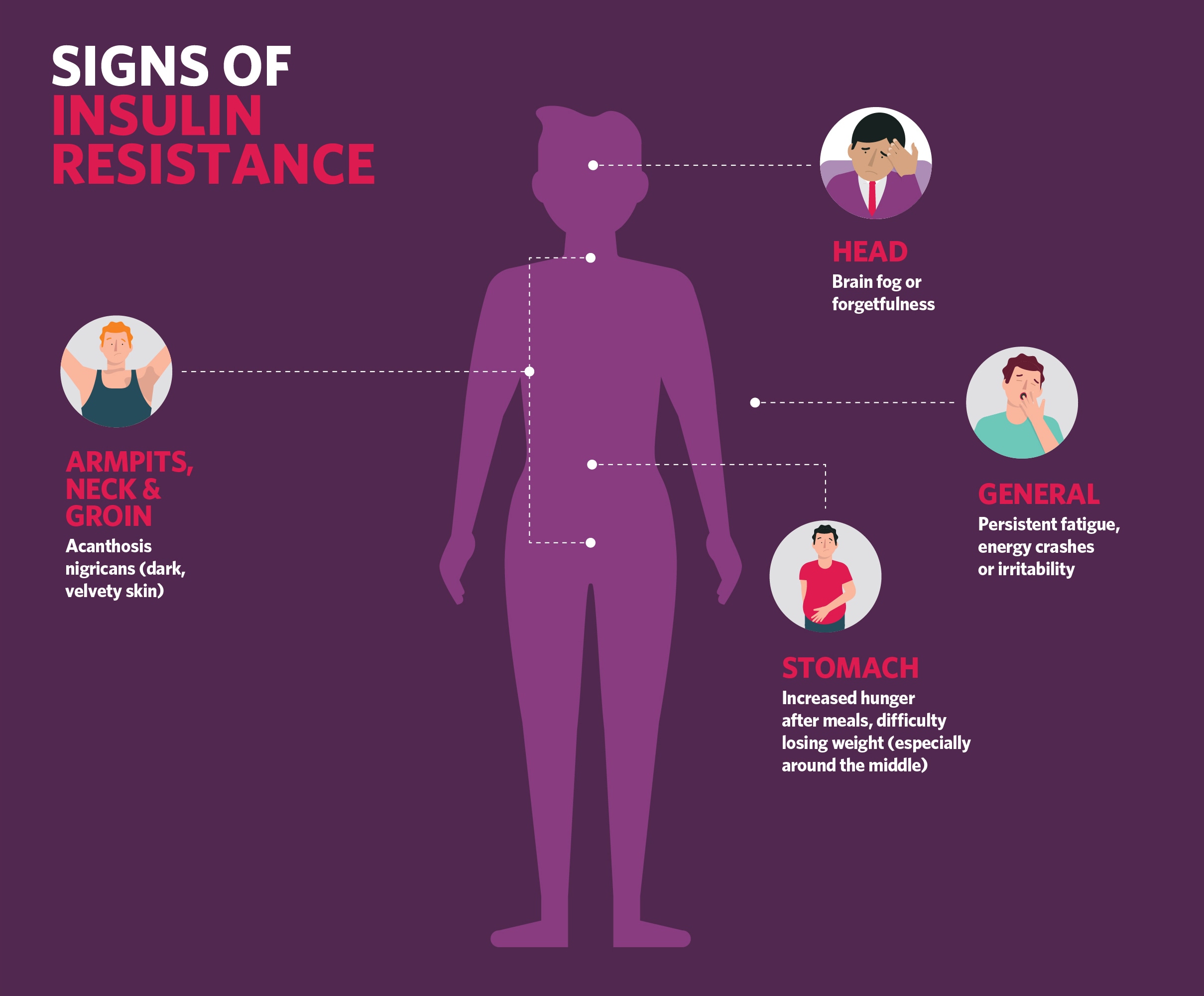
Often, there are no obvious symptoms of insulin resistance, but there can be some “non-specific symptoms that people often associate with insulin resistance”, says Assoc Prof Dear. He stresses that having these symptoms doesn’t necessarily mean you have insulin resistance.
- An energy crash, irritability or increased hunger after meals. “That's due to the pancreas trying to force a lot of insulin out in order to overcome insulin resistance, eventually leading to a significant fall in blood sugar levels.”
- Persistent fatigue. “Because the insulin can’t act to increase glucose uptake into the cell, people feel weak and fatigued.”
- Acanthosis nigricans – a dark, velvety thickening of skin folds most commonly around the neck, armpits and groin. “That’s due to excess insulin unable to activate the insulin receptor, so it sticks to other things, including skin and pigment receptors.”
- Difficulty losing weight, especially around your stomach.
- Forgetfulness or 'brain fog'.
Women with polyendocrine metabolic ovarian syndrome (formerly known as polycystic ovarian syndrome or PCOS) are more likely to have insulin resistance.
When to see a doctor
If you’re experiencing energy crashes after meals, persistent fatigue and/or patches of darkened skin, Assoc Prof Dear recommends you see your GP.
Along with testing for markers of metabolic syndrome, like blood pressure and cholesterol, your GP may recommend the following tests:
- HbA1c: This is often done by a GP to measure your average blood sugar levels.
- Fasting insulin: A specialist might order this test to measure the insulin level in your bloodstream after you haven’t eaten for eight hours. Australian clinical practice guidelines don’t discuss this test, but it may sometimes be used by doctors to screen for pre-diabetes and diabetes.
- HOMA-IR: This test measures both the insulin and blood glucose levels from a single blood sample to detect how efficiently the body is using insulin. “It may assist in identifying the very early stages of insulin resistance,” says Assoc Prof Dear.
Unfortunately, there’s a lot of health misinformation online, so it’s very important to talk to your doctor for accurate guidance.
How you can reverse insulin resistance
Assoc Prof Dear says insulin resistance can be reversed. These are the lifestyle changes and health interventions that make a difference.
Exercise
Being physically active helps reverse insulin resistance in two ways, says Assoc Prof Dear.
“Movement in the form of exercise is an unbelievably effective way to free up the insulin resistance by overriding it, which the muscles can do if they are active enough – and also reducing the weight, which reduces the inflammation that is part of the blockage to the insulin receptor working properly.”
Aim for at least 30 minutes of exercise a day most days of the week, as well as resistance training twice a week.
A 2020 study found that just 10% weight loss lowered blood insulin levels significantly.
Sleep
“People with less than 6 hours’ sleep a day can have high spikes in cortisol and growth hormone, and that can also block the insulin receptor,” says Assoc Prof Dear.
The Sleep Health Foundation says most adults need 7 to 8 hours of sleep a day.
Quit smoking and reduce alcohol
If you drink alcohol, restrict your intake to no more than four standard drinks on any one day and no more than 10 standard drinks across the week. And if you need help quitting smoking, contact Quitline on 13 78 48.
Medication
Sometimes medication is prescribed alongside lifestyle modifications. Talk to your GP for advice and to discuss your options.
Diet
Eating a healthier diet to manage your weight can go a long way towards reducing insulin resistance, and a big part of that is choosing low glycaemic index (GI) carbohydrates over high GI options.
Low GI carbs to eat more of:
- rolled oats
- wholegrain pasta
- multigrain or seeded bread
- traditional sourdough
- basmati or long-grain rice
- sweet potato
- quinoa
High GI carbs to limit:
- instant oats
- sugary or highly refined cereals
- white pasta
- instant noodles
- jasmine rice
- white potato
- couscous
“Refined [high GI] carbohydrates are really stressing the pancreas to produce more insulin in an environment where it’s struggling to produce enough insulin to meet current demands – it’s a bit like flogging a dead horse,” explains Assoc Prof Dear.
What to eat: Insulin resistance diet principles
Eating well can help reverse insulin resistance. While there isn’t a fixed ‘insulin resistance diet’, there are some recommended ways to improve your food habits.
- Eat more whole grains, fruits, vegetables and lean proteins like fish and chicken.
- Eat less saturated fat and salt.
- Swap high GI carbohydrates for low GI carbs.
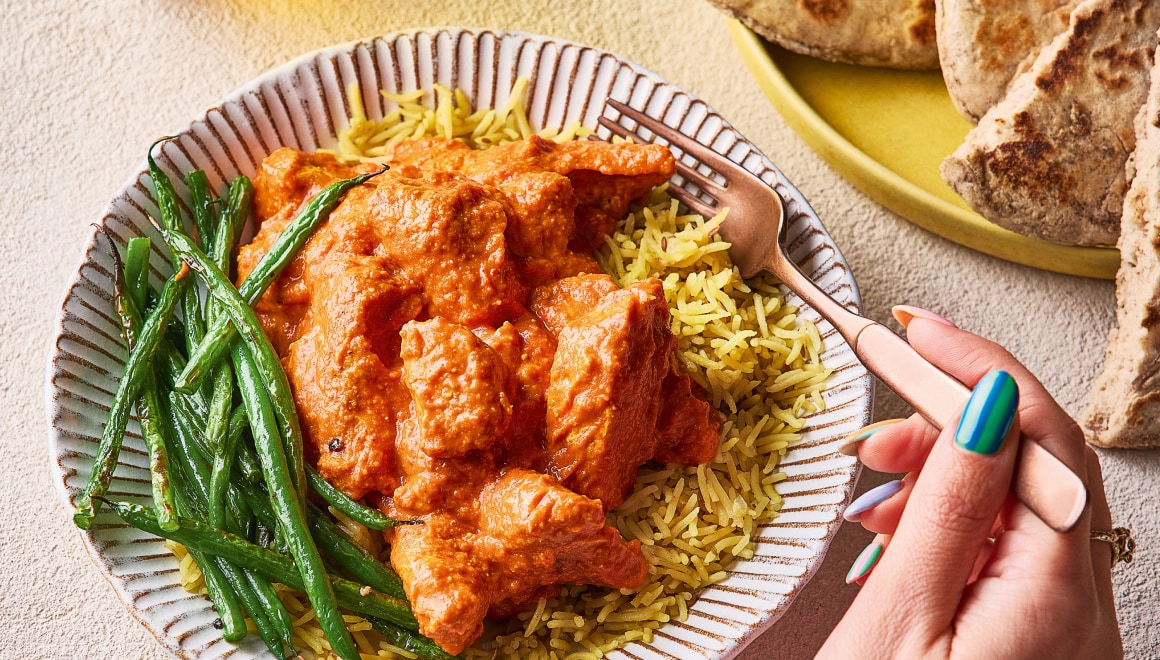
Chunky chicken masala and roasted green beans
Here’s a delicious meal that helps meet insulin resistance diet principles. You can use a stick blender for this recipe instead of a food processor or blender – just ensure it’s all super smooth when you’re done.
Prep time: 40 to 50 minutes
Serves: 4
Ingredients
- Extra virgin olive oil in a spray bottle, for greasing
- 450g red capsicum, chopped into 4cm chunks
- 50g leek, thinly sliced
- 150g green beans (fresh or frozen)
- Long-grain or brown rice, cooked, to serve
For the chicken
- 1½ tsp garlic-infused olive oil
- 650g skinless chicken breast fillet, cut into chunky 2.5cm pieces
- ¼ tsp black pepper
- 1 tsp smoked paprika
For the sauce
- 300ml (1¼ cups) passata (sieved tomatoes)
- 1 tbsp tomato purée (paste)
- 50g (½ cup) ground almonds
- 1 tsp ground cumin
- ½ tsp ground coriander
- ½ tsp ground turmeric
- ¼ tsp ground cardamom (optional)
- 1 tsp peeled and finely grated fresh ginger
- ¼ tsp black pepper
- 3 tbsp low-fat Greek yoghurt
Method
- Preheat the oven to 180ºC fan/200ºC. Lightly grease 2 large baking trays by spraying with oil.
- To the first tray, add the capsicum, spray lightly with oil and roast for 25 to 30 minutes, turning them over halfway and adding the leek to the tray at the same time.
- Add the green beans to the second tray, spray with oil and season with a pinch of pepper. Place in the oven for 12 to 15 minutes or until a little crisp (it might take a little longer, especially if frozen). Keep the green beans in the oven on low until ready to serve.
- Meanwhile, for the chicken, heat the garlic oil in a large saucepan and place over a medium to high heat. Toss the chicken with the pepper and smoked paprika. Add to the hot pan in a single layer and sear for 6 to 8 minutes, turning to colour all sides until fully cooked through. Remove the pan from the heat.
- In a blender or food processor, for the sauce, blend the roasted capsicum and leek with the passata, tomato purée, ground almonds, spices, ginger and seasoning until very smooth.
- Transfer the blended sauce to the pan containing the chicken and place back over a low to medium heat. Simmer for 4 to 5 minutes until piping hot and the sauce has lightly thickened, adding a splash of water if it’s too thick. Remove from the heat and stir in the yoghurt until smooth. Serve with the roasted green beans and rice.
- This can be stored in the fridge for up to 3 days in airtight containers, then reheated in the microwave. Or freeze for up to 3 months in airtight containers then defrost in the fridge before reheating in the microwave.
Tips:
- Using jarred capsicum instead of fresh? Use a 300g jar of roasted capsicum (drained) and skip the roasting step. Instead, roast the leek and green beans on the same tray for 15 minutes and proceed with the recipe as directed.
- Use dairy-free or lactose-free yoghurt if preferred.
- For a vegetarian option, swap chicken for 2 x 400g cans of chickpeas or green/brown lentils (drained), added straight into the sauce after blending.
This is an edited extract from Feel Good Gluten Free by Becky Excell, published by Quadrille.
How your health cover can help
HCF members concerned about their risk of developing pre-diabetes or type 2 diabetes might find these programs helpful. Chat with us online or call 13 13 34 to discuss your eligibility.
- CSIRO Total Wellbeing Diet: Eligible members can get access at a discount or at no extra cost to the evidence-based CSIRO Total Wellbeing Diet*. Created by Australia’s national science agency, it combines a high-protein, low-GI eating plan with exercise and proven weight management tools to help improve habits and create lifelong positive behaviours.
- Health Management Programs: Access to programs including a dietitian-led, HCF-approved weight management program^. Plus, if your doctor or healthcare professional recommends exercise or a gym program for a health condition like diabetes or osteoporosis, you may be able to claim towards the cost+.
Build healthy habits
The lifestyle changes that help manage insulin resistance can also improve the health of the entire household. We’ve partnered with Ethos Health to bring our members Healthy Families for Life and Healthy Teens for Life – resources to support kids, from birth to teens, to develop positive nutritional habits for growth and development and reduce the risk of chronic conditions in their future. Eligibility criteria apply#.
Related articles
10 healthy food swaps
Managing your weight doesn’t have to be overwhelming. These healthy food swaps can support your wellbeing and give you more energy.
Can you reverse type 2 diabetes?
Did you know adopting healthier lifestyle habits can help prevent, manage or reverse type 2 diabetes and pre-diabetes? Here’s how.
Diabetes: Common signs
Thirsty, tired and spending a lot of time in the bathroom? These could be symptoms of diabetes – but there are ways to treat and live with the condition.
What is metabolic syndrome?
Metabolic syndrome affects more than one-third of the Australian population. Here’s what you need to know about this condition and how to prevent it.
IMPORTANT INFORMATION
* Eligibility criteria apply. For more information, see hcf.com.au/csiro-total-wellbeing-diet
^ Eligibility criteria apply. For more information, see hcf.com.au/health-management-programs
+ Before you start any Health Management Program, check you're on eligible cover and the provider of the program is recognised by us by calling 13 13 34 or visiting a branch. To claim you'll need to submit a claim form and provide supporting documents. Unless otherwise stated, all programs have a 2-month waiting period and depend on cover eligibility and annual limits.
# Eligibility criteria apply. For more information, see hcf.com.au/healthyfamilies
This communication contains information which is copyright to The Hospitals Contribution Fund of Australia Limited (HCF). It should not be copied, disclosed or distributed without the authority of HCF. Except as required by law, HCF does not represent, warrant and/or guarantee that this communication is free from errors, virus, interception or interference. All reasonable efforts have been taken to ensure the accuracy of material contained on this website. It’s not intended that this website be comprehensive or render advice. HCF members should rely on authoritative advice they seek from qualified practitioners in the health and medical fields as the information provided on this website is general information only and may not be suitable to individual circumstances or health needs. Please check with your health professional before making any dietary, medical or other health decisions as a result of reading this website.
