
Women's Health
What is perimenopause? Early signs and what to expect
Published October 2026 | 5 min read
Expert contributor: Dr Terri Foran, sexual health physician and board member, Australasian Menopause Society
Words by Sabrina Rogers
Key takeaways
- Perimenopause symptoms can begin years before menopause and often include hot flushes, brain fog and changes to your periods and mood.
- Perimenopause is a normal hormonal transition that can last between two and 10 years.
- A GP can diagnose perimenopause based on your symptoms and recommend evidence-based treatments and lifestyle changes to help manage them.
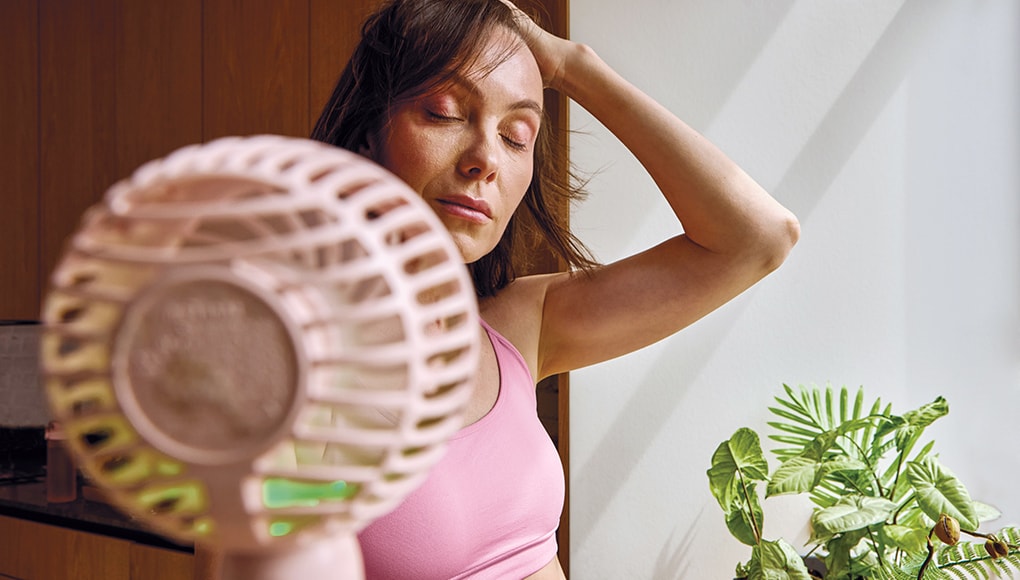
From irregular periods and hot flushes to brain fog and anxiety, learn how to spot the signs of perimenopause and what can help.
Wondering why your periods have changed, you're waking up drenched in sweat or you can't seem to think straight? You could be in perimenopause – the hormonal transition before menopause that signals the gradual end of your reproductive years.
The tricky part is perimenopause symptoms often creep up gradually over several years, making them easy to dismiss as stress, ageing or simply having too much on your plate.
Learn how to recognise the early signs of perimenopause and what to do about them.
Perimenopause test
Could your symptoms be perimenopause?
Answer eight questions based on clinically recognised indicators. This perimenopause quiz is a general guide, not a diagnostic tool.
1 / 3
Your result
0 of 8 signs
You rated these moderate or severe:
This quiz may help you understand whether your symptoms could be linked to perimenopause, but it isn't medical advice or a diagnosis. If you're concerned about your symptoms, speak with your doctor or healthcare professional.
What is perimenopause?
“You officially reach menopause 12 months after your last period, but the hormonal changes leading up to it can begin years earlier,” says Dr Terri Foran, sexual health physician and board member of the Australasian Menopause Society. “This transition phase is known as perimenopause.”
During perimenopause, your hormone levels become less predictable and your ovaries react less reliably, Dr Foran explains, so the length of time between periods commonly changes. “Some months, you’ll have a normal period and feel okay,” she says. “Other months, you might produce extra oestrogen, which can lead to symptoms like breast tenderness, nausea and headaches. And then there might be months where you produce less oestrogen and start noticing things like hot flushes. All these hormonal fluctuations can also affect mood.”
Early signs of perimenopause
Around 50% of women experience mild to moderate menopause-related symptoms, about 25% have symptoms severe enough to affect their daily activities and approximately 25% experience no symptoms at all. Those who do have menopause-related symptoms will usually start to notice them during perimenopause.
“The most obvious early signs of perimenopause are changes in the menstrual cycle, such as heavy periods, missed periods and a shorter or longer cycle, as well as hot flushes,” says Dr Foran. “But other symptoms such as mood changes and trouble concentrating can be harder to pinpoint, because they can also be caused by other factors such as stress or lack of sleep.”
Perimenopause symptoms
Every woman experiences perimenopause differently, but these are some of the most common symptoms.
Physical symptoms:
- hot flushes and night sweats (vasomotor symptoms – sudden feelings of heat and sweating)
- changes to your periods, e.g. irregular, heavier, lighter, longer or shorter
- sleep problems, including trouble getting to sleep, staying asleep or waking up too early
- fatigue
- headaches
- joint and muscle aches and pains
- breast tenderness
- weight gain or changes in body shape, particularly around your stomach
- bloating
- vaginal dryness or discomfort, which can make sex painful
- reduced sex drive (low libido)
- bladder and urinary symptoms, like needing to urinate more often, urinary leakage or repeated urinary tract infections
- dry or itchy skin, sometimes with tingling or crawling sensations
Emotional and cognitive symptoms:
- mood swings
- anxiety
- low mood or depression
- irritability
- difficulty concentrating (brain fog)
- forgetfulness
“If you previously had PMS [premenstrual syndrome], you may notice that your symptoms are worse during perimenopause,” says Dr Foran. “It’s also important to note that most of the research has been done on Western women, and how you experience perimenopause can be quite different depending on what culture and ethnic group you belong to. For example, women from Asian backgrounds often have more aches, pains and sleep disturbances.”
How is perimenopause diagnosed?
Perimenopause symptoms can start to appear up to 10 years before menopause, with some women experiencing them as early as their mid-30s, notes Dr Foran.
Perimenopause can sometimes be confused with premature menopause, which is when menopause occurs before age 40. While premature menopause is also usually preceded by perimenopause, it has different underlying causes. If you’re experiencing menopause symptoms in your 20s or 30s, talk to your GP.
Likewise, if you suspect you might be perimenopausal, book an appointment with your GP.
“We can’t diagnose perimenopause with a blood test because hormones are constantly changing, so what a blood sample shows today could be completely different a week from now,” says Dr Foran.
“But a GP can run a general health check and eliminate other conditions that might be causing your symptoms, such as thyroid issues or anaemia. If nothing shows up, they may ask you to chart your symptoms for a few months to detect patterns and work out a plan.”
Through HCF’s partnership with GP2U, eligible members* can access telehealth appointments, including a standard GP consultation (up to 10 minutes) for a fee of $50. Eligible rural and remote members^ can access an annual 15-minute online GP consultation with GP2U, at no additional cost.
How long does perimenopause last?
Perimenopause can last between two and 10 years, with the average around four to six years.
For some women, menopausal hormone therapy (MHT) – formerly known as hormone replacement therapy (HRT) – can be an effective way to manage symptoms. To find out more about MHT, tune into HCF’s Menopause Matters podcast. Speak to your GP about any risks associated
with MHT and whether it's right for you.
Dr Foran notes that MHT can be tricky to manage during perimenopause because oestrogen levels can fluctuate dramatically.
“While it can be beneficial when hormones are low, it will also add more hormones when they’re already high,” she explains. “Your GP may talk to you about suppressing your menstrual cycle with the oral contraceptive pill or a contraceptive implant to prevent those hormonal highs, and then adding MHT to top up your hormone levels during the lows if needed.”
Managing perimenopause and where to start
There are several ways to manage perimenopause symptoms.
1. Medical treatment
In addition to MHT, your GP might discuss various prescription and non-prescription medications that might help.
2. Lifestyle changes
A range of healthy habits may help keep your perimenopause symptoms in check and improve your overall health.
- Eat a balanced diet. Eligible members can get access to the evidence-based CSIRO Total Wellbeing Diet+ at a discounted rate or for no additional cost, which combines a high-protein, low-GI eating plan with exercise and proven weight management tools to help improve habits and create lifelong positive behaviours.
- Stay physically active. Aim for a mix of cardio, strength and weight-bearing activities.
- Look after your bone health. Resistance exercise and getting enough calcium (1,000mg/a day before age 50 or menopause and 1,300mg/a day after) and vitamin D can help.
- Prioritise good sleep. Eligible HCF members# can get a 12-month subscription to the Sleepfit app at no additional cost, designed to improve sleep and overall wellbeing.
- Limit alcohol and caffeine. Rethinking the way you drink may help relieve your symptoms. Hello Sunday Morning’s Daybreak app connects you anonymously with an online peer community to help you change your relationship with alcohol and track your drinks for free. Eligible HCF members can also be referred to additional mental health support through Daybreak**.
- Avoid smoking and vaping. Both can worsen perimenopause symptoms and increase your risk of long-term health problems.
- Maintain a healthy weight. Managing menopause-related weight gain can support your overall health and reduce the risk of chronic disease.
Always consult your GP before making any changes to your diet and physical activity.
3. Mental health support
Reducing stress, staying socially connected and seeking help if you're struggling with depression or anxiety can help protect your mental wellbeing. All eligible members on your policy can get an annual telehealth HealthyMinds Check-in^^ with a psychologist from one of our partners anywhere in Australia. Plus, with eligible extras cover, you can claim towards a range of evidence-based online cognitive behavioural therapy programs through THIS WAY UP++, a mental health service developed by psychiatrists and psychologists.
Tune in to our Menopause Matters podcast
Join host and author of Queen Menopause Alison Brahe-Daddo as she unpacks the experience of this life-changing yet entirely normal part of life. Learn some of the best ways to manage your symptoms and navigate your career, mental health and relationships during this time, plus discover the joys of life post-menopause.
Listen to Menopause Matters here or on your device through Apple Podcasts and Spotify.
RELATED ARTICLES
Natural remedies for menopause
Medication is not the only option to ease menopause symptoms. Explore natural remedies for menopause, from diet and exercise to complementary therapies.
Menopause weight gain explained
Menopause weight gain and a drop in sex drive are common. There’s lots you can do about it – here are your options.
The mental toll of menopause
While this stage of life brings with it physical challenges, it can also have repercussions for your mental health. Here’s why – and how – you can feel better.
Menopause and heart health
Heart health is more important than ever during and after menopause. We explain why and what you can do to stay heart healthy.
Important Information
* Eligibility criteria apply. For more information, see hcf.com.au/gp2u
^ Available to members with HCF hospital and/or extras cover who live in a non-metropolitan MM2–MM7 classified postcode. To check whether your postcode is eligible, visit the Australian Government's Modified Monash Model classification page: https://www.health.gov.au/topics/rural-health-workforce/classifications/mmm Excludes Accident Only, Ambulance Only and Overseas Visitors Health Cover. Eligible members under 16 years old may need to have a parent or guardian present. If you have any questions about the eligibility criteria, please email wellbeing@hcf.com.au
+ Eligibility criteria apply. For more information, see hcf.com.au/csiro-total-wellbeing-diet
# Eligibility criteria apply. For more information, see hcf.com.au/sleepfit
** For more information, see hcf.com.au/daybreak
^^ Eligibility criteria apply. For more information, see hcf.com.au/mental-support
++ You should make your own enquiries to determine whether this service is suitable for you. If you decide to use this service, it'll be on the basis that HCF won't be responsible, and you won't hold HCF responsible, for any liability that may arise from that use.
This communication contains information which is copyright to The Hospitals Contribution Fund of Australia Limited (HCF). It should not be copied, disclosed or distributed without the authority of HCF. Except as required by law, HCF does not represent, warrant and/or guarantee that this communication is free from errors, virus, interception or interference. All reasonable efforts have been taken to ensure the accuracy of material contained on this website. It’s not intended that this website be comprehensive or render advice. HCF members should rely on authoritative advice they seek from qualified practitioners in the health and medical fields as the information provided on this website is general information only and may not be suitable to individual circumstances or health needs. Please check with your health professional before making any dietary, medical or other health decisions as a result of reading this website.
