
Health agenda
The dos and don’ts of teeth whitening
Published April 2026 | 5 min read
Expert contributor: Dr Victoria Capp, Clinical Manager, HCF Dental Centre network
Words by Alana Wulff
Worried about discoloured teeth? Before you reach for a DIY teeth-whitening kit, here’s what the experts want you to know.
Teeth whitening, which involves bleaching your teeth to lighten the colour of the enamel, is often promoted as a quick, affordable and risk-free way to brighten your smile, but the reality can be more complex. With a growing number of DIY teeth-whitening kits available online and in pharmacies, many Aussies are whitening their teeth without completely understanding what works and what could cause lasting damage.
While data from the Australian Dental Association reveals 22% of Australians have whitened their teeth, only one in three do so under the supervision of a dental professional.
Teeth whitening isn’t a one-size-fits-all solution. The cause of discolouration, the condition of your teeth and gums, and the type of treatment used can all influence the outcome. Understanding what’s behind tooth staining is an important first step in deciding whether whitening is appropriate and what approach is likely to be both safe and effective.
What causes discoloured teeth?
The natural colour of teeth isn’t the same for everyone, with factors like genetics and enamel structure determining how bright and white our smile is. “Not everyone is born with a B1 shade, which is the lightest shade of teeth,” says Dr Victoria Capp, Clinical Manager of HCF’s Dental Centre network.
Some of us may have intrinsic (internal) staining, which starts inside the tooth and affects the dentin (the layer underneath your enamel). Causes include dental trauma and certain medications, and the resulting discolouration can’t be removed by bleach.
Discoloured teeth can also be caused by extrinsic (external) staining on the outside of the tooth. These stains typically come from the foods we eat, as well as lifestyle factors.
These include:
- tea and coffee
- red wine
- iron-rich foods
- smoking
- certain mouthwashes
- poor oral hygiene.
The colour of your teeth can also change as you age, because your enamel (the outer layer of your teeth) usually becomes thinner.
“A dental clean, which can lift the brightness of your teeth, might be the best option – particularly in the case of external discolouration,” says Dr Capp. If you have gum disease, plaque or tartar, she adds, you need to get these addressed first before teeth whitening treatment.
Suitability for teeth whitening depends on the condition of your teeth, and boosting your oral hygiene can help with this. “Bleaching isn’t suitable for all cases, particularly those with patchy teeth, but it’s suitable if you want to lift a slightly aged tooth,” explains Dr Capp. “If a patient has all their natural teeth – no fillings, no crowns, a little bit of colour – you’ll have a good result.”
How does professional teeth whitening work?
Getting the best results from teeth whitening starts before the bleach is applied. “You need a good canvas to get the results you want,” says Dr Capp. This may mean getting a dental clean first to remove stains like coffee, tea and wine.
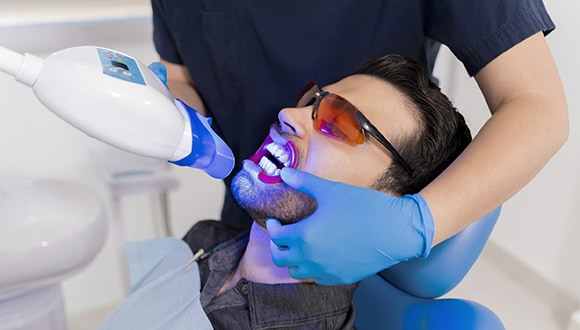
Following this, there are two main treatment options available through your dental professional – in-chair teeth whitening at the practice or a dentist-prescribed, take-home kit.
Dr Capp says in-chair teeth whitening uses a higher concentration hydrogen peroxide (roughly 25%) than home kits. This is applied directly to the teeth for about an hour while the gums are carefully protected.
“The at-home option involves custom-fitted trays that are made from a mould of your teeth and used with a lower concentration of bleach – typically around 9.5 to 12%. You've got to wear it for 20 minutes every day or every other day, but you can still get good results,” says Dr Capp.
Although it takes longer than in-chair treatment, this second method may be better for people who have dental anxiety. “For those individuals, I’d probably recommend the at-home bleaching,” says Dr Capp.
How long does teeth whitening last?
Professional teeth whitening isn’t a permanent fix and how long the results last will depend largely on your lifestyle habits. Dr Capp suggests, “I wouldn’t recommend doing it very often,” she says. “Get it done once – then you can get a take-home bleach kit and can top up if and when as needed.”
How much does teeth whitening cost?
The cost of professional teeth whitening can vary depending on your extras cover and the complexity of your needs. Dr Capp says generally, the in-chair teeth-whitening process sits between $500 to $600, but it’s important to check your level of private health extras cover to see if you're covered for teeth whitening treatment and how much you could expect to get back.
Is teeth whitening safe?
When performed or supervised by a registered dental professional, teeth whitening is considered safe and well tolerated.
“Post-whitening, sometimes your teeth can get quite dehydrated, and you can get a little bit of blotchiness,” says Dr Capp. “You can also get ‘zings’ [sudden, sharp pains] for a couple of days but this is often temporary.”
To combat this, she recommends using sensitive toothpaste before and after treatment, and being mindful of what you’re eating. “When your teeth have been bleached, they’re more porous and absorbent,” she explains. “If you’ve just had your teeth bleached, don’t go home that night and have a turmeric curry or a salad with beetroot.”
DIY teeth-whitening kits: what you need to know
While DIY teeth-whitening products available from supermarkets, pharmacies or online stores may appeal to some people because they’re usually cheaper than a dental procedure and easy to use at home, Dr Capp believes it’s important to be mindful of the ingredients and marketing claims.
If you’re considering teeth whitening, the safest and most effective starting point is a conversation with your dentist. HCF Dental Centres offer professional teeth-whitening services, or you can use our Find a Provider tool to locate More for Teeth providers at over 17,000 locations, with online bookings available for selected providers via the BookNow tool.
Book a dental visit through our No-Gap network
A brighter smile deserves ongoing care – and keeping up with check-ups helps your teeth stay healthy and bright. Eligible members who visit an HCF Dental Centre or see a provider in our nationwide No-Gap network can get 100% back* on a range of services each calendar year, like one or two check-ups, scale and cleans, a fluoride treatment and two mouthguards.
Related articles
How to look after your teeth
Good oral hygiene supports your overall wellbeing. Here's what you should know about brushing your teeth, how to floss and how often to go to the dentist.
What does dental cover pay for?
Need some help understanding exactly how dental cover works? We explain what can and can’t be covered, and how you can get the best value from your cover.
Dental care for every age
A healthy smile starts at a young age. Read a dentist’s advice on dental care from babyhood through to the senior years.
Tooth pain and sensitivity
Whether it’s a mild ache or a bit of sensitivity, understanding the cause of tooth pain is the first step to feeling better.
IMPORTANT INFORMATION
* 100% back at More for You program providers in our No-Gap network is available on selected covers. Waiting periods and annual limits apply. Our No-Gap network of healthcare providers changes often. Please check that your provider is part of our No-Gap network before you book or attend an appointment. See hcf.com.au/100back
This communication contains information which is copyright to The Hospitals Contribution Fund of Australia Limited (HCF). It should not be copied, disclosed or distributed without the authority of HCF. Except as required by law, HCF does not represent, warrant and/or guarantee that this communication is free from errors, virus, interception or interference. All reasonable efforts have been taken to ensure the accuracy of material contained on this website. It’s not intended that this website be comprehensive or render advice. HCF members should rely on authoritative advice they seek from qualified practitioners in the health and medical fields as the information provided on this website is general information only and may not be suitable to individual circumstances or health needs. Please check with your health professional before making any dietary, medical or other health decisions as a result of reading this website.
