
Health agenda
Knee pain causes explained – and how you can manage symptoms
Published April 2026 | 5 min read
Expert contributors: Dr Mark Overton, Senior Lecturer in Physiotherapy, University of Technology Sydney
Words by Trudie McConnochie
Key takeaways
- Knee pain is often caused by osteoarthritis but can also be triggered by other forms of arthritis and injury.
- Knee pain is common, but understanding the causes and staying active can make a difference.
- See a healthcare professional if knee pain persists or worsens.

From clicking sounds to aching when you run, knees can cause plenty of issues. Learn common knee pain causes and how to manage them.
If there were an Olympic event for hardest working joint in the body, the knee might just win gold. As the largest joint in the body, the knee handles a range of complex movements, keeping us both stable and mobile while we walk, sit, stand and crouch, to name a few. But that complexity can make the knee more susceptible to pain, says Dr Mark Overton, Senior Lecturer in Physiotherapy at the University of Technology Sydney.
“It has high demands placed upon it, and it’s a weight-bearing joint,” he says. “It’s one of the more potentially sensitive structures of the body, too.”
But while knee pain is common, keeping it moving can go a long way towards reducing pain. “There’s a perception that exercise might ‘wear out’ the knee, but that’s a complete myth,” says Dr Overton.
Discover common knee pain causes and the best ways to support this hard-working joint.
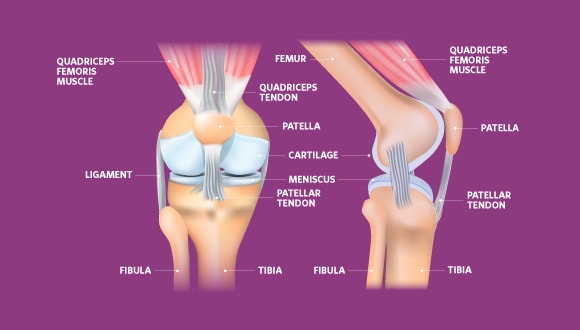
Knee anatomy guide
The knee is the meeting point of three bones, which are covered in cartilage:
- femur
- tibia
- kneecap (patella).
Attached to these bones are ligaments to provide stability, and tendons that join them to the leg muscles.
What causes sore knees?
One of the biggest causes of knee pain is osteoarthritis, which happens when the cartilage on knee bones changes with age, causing pain and swelling. Around 1.2 million Australians are living with knee osteoarthritis.
Dr Overton suggests that other common causes of knee pain are:
- injury, including ACL (anterior cruciate ligament) injuries
- other forms of arthritis, including rheumatoid arthritis and gout
- patellofemoral syndrome (when the cartilage on the underside of the kneecap softens abnormally).
Why do knees click or crack?
Noises from the knee, like clicking or cracking sounds, don’t necessarily indicate a problem, says Dr Overton. The most common cause is air bubbles forming in the joint’s fluid, which is more likely when you start moving after being immobile.
“People need to know they’re not damaging themselves when they’re hearing noises,” he says. “With rehabilitation and a good exercise program, those noises do generally quieten down over time.”
If you’re experiencing pain as well as noises, Dr Overton recommends seeing a doctor or physiotherapist.
Why does crouching hurt?
If crouching down causes you knee pain, you’re not alone. Dr Overton says crouching puts load on the knee, which can be uncomfortable – especially if you have osteoarthritis. But if there isn’t an underlying health issue, pain could simply be because you’re out of practice.
“Kids are always up and down crouching, but as adults, it’s something we do less often over time, so we get less used to these types of positions,” he explains. “But we can develop squatting and crouching tolerances over time.”
How to treat knee pain
Here are the most common treatments for knee pain.
Physiotherapy
Physiotherapists can provide effective treatments for knee issues, says Dr Overton. “Physio can help with things like pain, function and improving quality of life.”
If you have knee osteoarthritis, you may be able to join the HCF Knee Osteoarthritis Program*, which offers coaching support as well as exercises to strengthen muscles and improve mobility. Fill out this short survey to find out if you’re eligible.
Exercise
When it comes to knee pain, “motion is lotion”, says Dr Overton. “Exercise is safe and supported by the evidence to improve people’s functioning, as well as their levels of pain.”
If you’re looking for guided support with exercise, eligible members can access the HCF No-Gap GLA:D® Knees Program^ to help build strength and confidence so you can stay active, manage your condition and reduce pain.
If your doctor or healthcare professional recommends exercise or a gym program for a health condition like osteoarthritis, you may be able to claim towards the cost with HCF. Ask your doctor, physio or other allied health provider to fill in the exercise and gym benefits form.
Weight management
If you’re overweight or obese, reducing the load on your knee by maintaining a healthy weight can improve your pain levels, especially for osteoarthritis. A US study found 10% weight reduction was linked to better knee pain and function in overweight and obese adults with osteoarthritis, due to the knee carrying less load and being less inflamed.
“Adipose or fat tissue causes widespread inflammation, and with arthritis, the whole knee is inflamed,” Dr Overton explains. “So, if we can lower inflammation levels [by reducing fat tissue], it can make people more comfortable and function better.”
Need help managing your weight? The Osteoarthritis Healthy Weight for Life program supports eligible members+ who want to reduce pain in their joints and improve mobility.
Medication
Anti-inflammatory and pain-relief medications may be recommended for knee pain. Chat to your GP for guidance.
Surgery
Total or partial knee replacement surgery is a last resort when non-surgical treatments like physiotherapy haven’t brought relief, Dr Overton says.
“There’s some emerging evidence regarding treatments for ACL injuries, showing comparable results whether people go down a surgical route or a conservative rehab route, when appropriate.”
If your doctor has recommended knee replacement surgery, our No-Gap Joints program# provides eligible members peace of mind with no out-of-pocket costs, from hospital admission through to discharge and post-surgery rehab (except for hospital excess), through participating hospitals and surgeons.
When to seek medical care
If you’re experiencing knee pain plus the symptoms listed below, Dr Overton recommends seeing your GP or a physio (you don’t need a referral) – especially if you’ve had a significant trauma or injury:
- Catching or locking in the knee.
- An unstable knee (it ‘gives way’ or struggles to bear weight).
- Swollen, hot or red knees.
“If your knee pain’s worsening, or if you’re becoming more functionally limited over time, I definitely recommend seeing a healthcare professional,” he adds.
Get support for knee osteoarthritis
Osteoarthritis is a common cause of ongoing knee pain, but there are practical ways to manage it. Our HCF Knee Osteoarthritis Program can help eligible members* improve their knee osteoarthritis symptoms and quality of life. The program is delivered online or over the phone from the comfort of your home by HCF health coaches.
Related articles
5 exercises to help reduce knee pain
These simple exercises can help support your knees, reduce knee pain and increase your sense of balance.
3 easy ways to prevent osteoporosis
Osteoporosis is common in women and men over 50, but prevention is possible. Here are simple tips to reduce your risk factors and keep your bones strong for life.
Don’t ignore aches and pains
Arthritis often starts with joint pain and stiffness so don’t ignore mystery pangs, particularly in your hands, hips or knees.
Research changing knee osteoarthritis care
By investing in knee osteoarthritis research, the HCF Research Foundation is helping people avoid unnecessary surgery and improve their quality of life.
IMPORTANT INFORMATION
* Eligible members must have held HCF hospital cover for 12 months (excluding Accident Only Basic and Overseas Visitors Health Cover). Clinical eligibility criteria also apply.
^ Eligibility criteria apply. For more information, see hcf.com.au/joint-health-programs
+ Eligibility criteria apply. For more information, see hcf.com.au/hwfl
# Eligible members will need to have HCF hospital cover including primary hip and knee replacements for 12 months (excluding Overseas Visitors Health Cover). Members must meet clinical criteria and be accepted into the program by a participating clinician and hospital. You may be required to pay a hospital excess, depending on your cover and if you're claiming for the first time in the calendar year. There may also be some small permitted gaps and additional costs for outpatient appointments, like a visit to your surgeon in their consulting rooms. Program is only available at participating hospitals for a limited time. For full program terms and conditions, including a list of participating hospitals and program end dates, visit hcf.com.au/nogapjoints
This communication contains information which is copyright to The Hospitals Contribution Fund of Australia Limited (HCF). It should not be copied, disclosed or distributed without the authority of HCF. Except as required by law, HCF does not represent, warrant and/or guarantee that this communication is free from errors, virus, interception or interference. All reasonable efforts have been taken to ensure the accuracy of material contained on this website. It’s not intended that this website be comprehensive or render advice. HCF members should rely on authoritative advice they seek from qualified practitioners in the health and medical fields as the information provided on this website is general information only and may not be suitable to individual circumstances or health needs. Please check with your health professional before making any dietary, medical or other health decisions as a result of reading this website.
