
Health Agenda
Can prostate cancer cause erectile dysfunction?
Published September 2026 | 7 min read
Expert contributor: Professor Henry Woo, Director of Uro-Oncology, Chris O’Brien Lifehouse
Words by Lucy E Cousins
Key takeaways
- Prostate cancer itself doesn’t usually cause erectile dysfunction, but treatment often does.
- Nearly all men experience erectile dysfunction within the first few months of prostate surgery (prostatectomy), but erectile function after prostatectomy often improves as the nerves recover.
- Changes after radiation or hormone therapy may develop more gradually.
- Erectile dysfunction can have a major impact on self-esteem, confidence and feelings of masculinity.
- There are various options that can help men maintain a satisfying sex life and support their mental health.
- If symptoms persist, speak with your GP or call Prostate Cancer Foundation of Australia. For helpful resources, access HCF’s Preparing for Hospital tool.
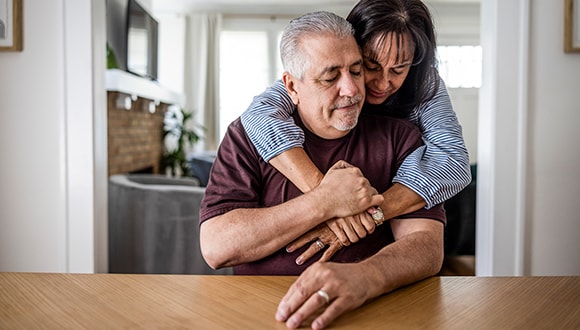
Erectile dysfunction is a common side effect of prostate cancer treatment. Here’s how recovery varies and what can help.
When Frank, 80, was first diagnosed with prostate cancer six years ago, he says he coped well with the diagnosis, years of active surveillance and an operation. It was after the latter that his mental health began to decline. He remembers “bawling my eyes out because I didn’t know what the hell was happening to me”. Because alongside a long list of doctor’s appointments and treatments came another hurdle he hadn’t expected.
“The emotional effect on your masculinity is real,” he explains. “For me, it passed fairly quickly ... but for others it can be quite a traumatic experience. Suddenly ‘I can’t perform’, suddenly ‘I can’t please my wife’ or suddenly I’m ‘no longer a man’.”
Erectile dysfunction and urinary incontinence are common side effects of prostate cancer treatments, and the impact on men’s mental health and relationships can be profound. For most men, there’s the embarrassment around talking about intimacy and the need for a judgement-free relationship.
Get expert advice on why erectile dysfunction happens after prostate cancer treatment, how long it typically lasts, how it can impact mental health and relationships, and what can help.
Can prostate cancer cause erectile dysfunction?
Although men with prostate cancer can experience erectile dysfunction, it’s not the condition itself that usually causes it, says Professor Henry Woo, Director of Uro-Oncology at Chris O’Brien Lifehouse.
“The various treatments for prostate cancer can be associated with erectile dysfunction, both temporarily and long term,” he confirms.
The prostate is close to the nerves, blood vessels and muscles involved in achieving an erection. Prostate cancer treatments like surgery (nerve-sparing and non-nerve-sparing prostatectomy), radiation or hormone therapy (also known as androgen deprivation therapy or ADT) each affect erectile function differently. Other side effects from prostate cancer treatment can include incontinence, bowel irritation, reduced libido and nerve damage.
”It’s also important to understand that being male and getting older are two very high-risk factors for developing [sexual] dysfunction as well,” explains Prof Woo, adding that around 50% of men aged 40 to 70 have some degree of erectile dysfunction. “So this is a common problem for all of my male patients.”
Does the type of treatment make a difference?
Surgery, particularly a non-nerve-sparing prostatectomy, can cause immediate erectile dysfunction, as the nerves are removed during the operation. Nerve-sparing surgery has better results for erectile function and urinary control, as the aim is to preserve the nerves and surrounding structures involved in erections. But erectile function takes time to recover and penile rehabilitation may help some men.
Radiation can cause erectile dysfunction that develops slowly, while ADT halts the production of male hormones, which causes erectile dysfunction and loss of libido.
Age plays a part, too, as you’re less resilient to recovery after certain treatments, according to Prof Woo. “In general, a man who’s under 50 has a fantastic chance of retaining their erectile function after some of these treatments. But the very same operation with the same level of skill [performed] on a man in his 50s, 60s or 70s does not yield as good results.”
How long does erectile dysfunction last?
Nearly all men experience erectile dysfunction within the first few months of prostate cancer treatment, but most whose nerves remain intact see some improvement within a year.
- Surgery: After nerve-sparing surgery, most men will regain erectile function within the first or second year following the operation. Prostate surgery recovery does depend on the age and pre-treatment erectile function of each patient, especially if they have any other erectile dysfunction risk factors, like diabetes or cardiovascular disease.
- Radiation: Most men will find their erections are still working after radiation, but it’s quite common for a decline in that function to happen about six to 18 months later. “It's believed the radiation is actually having a tissue-damaging effect on the nerves that drive erection function,” says Prof Woo.
- Hormone treatment: The majority of men on ADT will see erectile issues occur gradually, as the treatment alters hormone levels. “These men lose their libido when they go on their treatment, which you could argue is a saving grace, as they don’t seem to worry about it as much,” says Prof Woo.
Although a loss of erectile function and urinary incontinence after prostate cancer treatment is expected, you should discuss the different options for managing the issues with your GP.
The impact of erectile dysfunction on your mental health
Whether it’s associated with prostate cancer treatment or not, erectile dysfunction can have a major impact on self-esteem, confidence and sense of masculinity. Some men withdraw from their friends and social occasions, while others experience depression and anxiety around intimacy in their relationships. These mental health effects are common, but may not be discussed during medical appointments.
For John, 72, the uncertainty of living with a prostate cancer diagnosis resulted in changes to his behaviour.
“I did suffer a bit because I was getting six-monthly tests, and from the time of the test till I got the result I wasn’t the best person to live with,” he says. “I was quite aggressive and snappy. I didn’t tolerate too much of anything.”
For men prescribed hormone treatment, these challenges can be compounded by ADT-driven testosterone suppression. Along with erectile dysfunction and reduced libido, some men experience mood swings, depression, irritability and problems with thinking and memory, making it even more important to seek support if these changes begin to affect daily life.
How it affects intimacy and relationships
Erectile dysfunction, coupled with the discomfort of treatment, can challenge relationships, change sex lives and make intimacy harder. And research shows it’s not just the men with prostate cancer who are affected by erectile dysfunction. Partners can also experience depression, anxiety and feelings of rejection.
Margot, whose husband Keith, 48, was diagnosed with prostate cancer four years ago, says he shut himself off after surgery and went through a long period without speaking.
“He didn’t speak for probably nearly two months ... he just shut himself off,” she says. “I did too – we went into our shells. Being relatively young at the time and having three kids and thinking the worst is going to happen, I ended up with the doctor prescribing me antidepressants.”
Open communication, redefining what intimacy means within your relationship and empathy for each other’s experiences can help.
Prostate surgery recovery tips
While erectile dysfunction and urinary incontinence can be challenging, there are several treatments and support options to help men regain confidence, improve sexual function and support mental health.
Penile rehabilitation
There are four main options to help achieve an erection:
• oral medications like Viagra
• a mechanical device called a vacuum constriction or erection device (VCD or VED)
• self-injection therapy to draw blood into the penis
• a penile prosthesis, with an inflatable device and mini-hydraulic system.
Your GP can discuss these with you. Alternatively, through HCF’s partnership with GP2U, eligible members* can access telehealth appointments, including a standard GP consultation (up to 10 minutes) for a fee of $50. Eligible rural and remote members^ can access an annual 15-minute online GP consultation with GP2U, at no extra cost.
Pelvic floor exercises
Pelvic floor exercises and continence physiotherapy to help with incontinence after prostate surgery can be effective for some men. Find a physio with specialist expertise in pelvic health using our Find a Provider tool or through the Continence Health Australia website.
Mental health support
Speaking to a health professional can help. Eligible HCF members can get faster and easier access to psychologists online through an annual HealthyMinds Check-in+ as well as a range of mental health resources. The Prostate Cancer Foundation of Australia also has a Specialist Telenursing Service offering access to practical support and information. Call 1800 220 099.
Helping you prepare for hospital
Our Preparing for Hospital tool gives peace of mind with information and explainer videos on common procedures, including prostate cancer surgery, and questions to ask your doctor. This resource helps members make informed decisions and find out what they need to know and do before they head to hospital.
related artciles
Prostate health explained
Prostate health issues are common but often misunderstood. Learn about key prostate problems, symptoms to watch for and when to seek medical advice.
7 men’s health checks
Men need regular health check-ups to talk about preventive healthcare with their doctor and help detect early signs of common chronic diseases.
Testicular cancer: Symptoms and treatment
It’s one of the most common cancers in young men – and one of the most treatable. Learn why it’s important to see your GP if you notice any of these signs.
Why men avoid doctors
Men seek out medical help a lot less than women. Here's why it's important we start the conversation to reduce the stigma around men’s health.
IMPORTANT INFORMATION
* Eligibility criteria apply. For more information, see hcf.com.au/gp2u
^ Available to members with HCF hospital and/or extras cover who live in a non-metropolitan MM2–MM7 classified postcode. To check whether your postcode is eligible, visit the Australian Government's Modified Monash Model classification page. Excludes Accident Only, Ambulance Only and Overseas Visitors Health Cover. Eligible members under 16 years old may need to have a parent or guardian present. If you have any questions about this eligibility criteria, please email wellbeing@hcf.com.au
+ Eligibility criteria apply. For more information, see hcf.com.au/mental-support
This communication contains information which is copyright to The Hospitals Contribution Fund of Australia Limited (HCF). It should not be copied, disclosed or distributed without the authority of HCF. Except as required by law, HCF does not represent, warrant and/or guarantee that this communication is free from errors, virus, interception or interference. All reasonable efforts have been taken to ensure the accuracy of material contained on this website. It’s not intended that this website be comprehensive or render advice. HCF members should rely on authoritative advice they seek from qualified practitioners in the health and medical fields as the information provided on this website is general information only and may not be suitable to individual circumstances or health needs. Please check with your health professional before making any dietary, medical or other health decisions as a result of reading this website.
