
Health Agenda
Prostate health – what every man needs to know
Published June 2026 | 5 min read
Expert contributor: Bernard Riley, Head of Telenursing and Supportive Care Programs, Prostate Cancer Foundation of Australia
Words by Sabrina Rogers
Prostate health issues are common but often misunderstood. Learn about key prostate problems, symptoms to watch for and when to seek medical advice.
One in five men will develop prostate cancer in their lifetime, making it the most commonly diagnosed cancer in Australia.
The good news? The five-year survival rate for prostate cancer has risen from 60% to 96% over the past three decades due to increased awareness, earlier detection and advances in diagnostic tools and treatment.
But cancer isn’t the only condition that affects the prostate. About half of Australian men over 50 have an enlarged prostate (benign prostatic hyperplasia), while inflammation of the prostate (prostatitis) can affect men at various stages of life.
Understanding common prostate problems, symptoms to watch for and when to seek medical advice can help you stay on top of your prostate health.
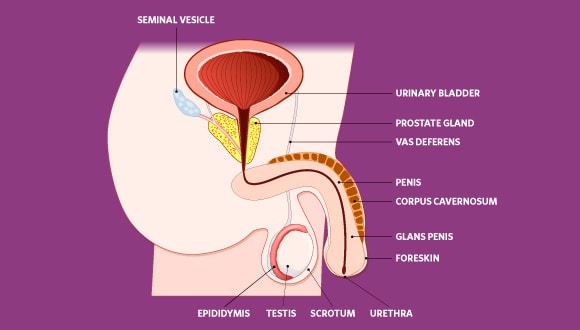
What’s the prostate?
A small, walnut-sized gland located below the bladder and in front of the rectum, the prostate is part of the male reproductive system. It produces some of the fluid that makes up semen, helps manage the flow of urine and semen, and supports healthy hormone function.
Common conditions that affect the prostate
“As men get older, their prostate grows,” says Bernard Riley, Head of Telenursing and Supportive Care Programs at the Prostate Cancer Foundation of Australia. “It starts getting larger when they’re in their 30s, and by the age of 70, it’s common for men to have prostate problems.”
Here are the three most common conditions affecting prostate health.
Prostate cancer
There are often no symptoms in the early stages of prostate cancer, or they can be easy to dismiss. According to Prostate Cancer Foundation of Australia, symptoms of prostate cancer may include:
- an urge to urinate more often during the day or at night (though waking once a night is often normal as men age)
- a sudden or urgent need to urinate
- not being able to urinate despite the urge
- poor urine flow (may include stopping and starting)
- discomfort or pain when urinating
- dribbling urine at the beginning or end when urinating
- feeling like your bladder isn’t empty.
In later stages of prostate cancer, the following symptoms may appear:
- blood in the urine or semen
- urinary tract infections
- incontinence
- difficulty getting or maintaining an erection
- pain during ejaculation
- pain in the lower back, upper thighs, hips, pelvis, testicles or penis
- weight loss
- fatigue.
Benign prostatic hyperplasia (BPH)
Also known as an enlarged prostate, BPH happens as men age and extra cells grow in the prostate.
According to Mayo Clinic, symptoms may include:
- a frequent or urgent need to urinate
- waking at night to urinate
- difficulty starting to urinate
- a weak stream
- incomplete urination.
Prostatitis
Prostatitis is when the prostate becomes inflamed and painful. It’s sometimes due to an infection, but there can be other causes. Prostatitis can appear suddenly (acute) or come and go over the course of months or years (chronic).
You may not have any signs or symptoms. But according to Harvard Health, symptoms could include:
- trouble urinating
- pain or burning when urinating or ejaculating
- pain in the penis, testicles, scrotum, rectum or pelvis
- fever
- blood in the urine.
While genetic factors, hormonal changes and infections can all cause prostate conditions, the most common cause is advancing age.

How are prostate problems diagnosed?
Because symptoms for all three prostate conditions overlap, your doctor will ask you a series of questions about what you’ve been feeling and your family history of prostate problems. They may also conduct the following tests:
- Prostate-specific antigen blood test (PSA test): PSA is a protein made by the prostate and high levels can indicate prostate cancer, BPH or prostatitis.
- Urine test: to help detect an infection or blood in the urine.
- Uroflowmetry: to measure the speed and volume of your urine flow.
- Digital rectal examination: a doctor inserts a gloved finger in your rectum to feel your prostate.
- Imaging tests: magnetic resonance imaging (MRI) detects prostate abnormalities and grades them to determine the likelihood of finding a clinically significant cancer. Computed tomography (CT) scans are often used to ‘stage’ the cancer by assessing its size and whether it has spread.
- Biopsy: a sample of prostate tissue taken with a needle to accurately diagnose prostate cancer.
- PSMA PET/CT: a new, specialised imaging test that combines CT and positron emission technology (PET) to detect prostate cancer cells in the body. It’s commonly used after a diagnosis of high-risk prostate cancer.
“Men often worry about the discomfort of a digital rectal examination, but it’s no longer commonly done by GPs,” says Bernard. “If you get referred on to a specialist, they may do one, but a PSA test is the most common first-line test these days to detect prostate problems.”
How are prostate conditions treated?
“BPH can be treated with medication [to relax bladder muscles or shrink the prostate] or surgery,” says Bernard. “If prostatitis is due to an infection, it might require antibiotics. Sometimes it can be treated with medications to reduce the size of the prostate or with surgery.”
Prostate cancer treatments include:
- hormone therapy
- chemotherapy
- radiotherapy
- surgery
- focal therapies (targeting specific areas of your prostate)
- prostate-specific membrane antigen (PSMA) therapy.
Genetic testing and PARP inhibitor medications are also available to some men with specific types of prostate cancer. Talk to your doctor about the best treatment for you.
Our Preparing for Hospital tool gives peace of mind with information and explainer videos on common procedures, including prostate cancer surgery and questions to ask your doctor.
Simple lifestyle changes to protect your prostate health
While limiting caffeine and alcohol may help manage urinary symptoms associated with prostate problems, there aren’t any miracle solutions to protect prostate health.
“Maintaining a healthy weight, eating well and exercising are good for general health and place less pressure on the bladder and abdomen, which can reduce the bother associated with lower urinary tract problems,” says Bernard.
“But there isn’t any great evidence that suggests doing or avoiding particular things will change what happens to the prostate naturally with age,” he adds. “The best thing you can do is be aware of when you should get tested and get all your tests and follow-ups done. It isn’t a one-off thing.”
When to see your doctor
Many men avoid going to the doctor for a variety of reasons, but staying on top of your health checks can help you detect any issues early and improve your outcomes.
If you have any signs or symptoms of prostate issues, speak to your GP without delay.
“Men who don’t have any signs or symptoms and who don’t have a family history of prostate cancer or breast and ovarian cancers should start testing from the age of 50,” advises Bernard.
“If men have a family history of prostate, breast or ovarian cancers, particularly related to the BRCA genes, they should discuss this with their GP and start testing at 45.”
For more information about prostate cancer, visit prostate.org.au or phone 1800 22 00 99 to speak with a prostate cancer specialist nurse.
Take charge of your health
For more information and practical resources to help you stay on top of your health, visit our Men’s Health Hub.
Related articles
7 men’s health checks
Men need regular health check-ups to talk about preventive healthcare with their doctor and help detect early signs of common chronic diseases.
Testicular cancer: symptoms and treatment
It’s one of the most common cancers in young men – and one of the most treatable. Learn why it’s important to see your GP if you notice any of these signs.
Why men avoid the doctor
Men seek out medical help less than women, which can impact their life span. Here’s why it’s important to reduce stigma around male health and wellbeing.
Health checks by age
Your guide to staying on top of your health with the right screening checks for every life stage and age.
IMPORTANT INFORMATION
This communication contains information which is copyright to The Hospitals Contribution Fund of Australia Limited (HCF). It should not be copied, disclosed or distributed without the authority of HCF. Except as required by law, HCF does not represent, warrant and/or guarantee that this communication is free from errors, virus, interception or interference. All reasonable efforts have been taken to ensure the accuracy of material contained on this website. It’s not intended that this website be comprehensive or render advice. HCF members should rely on authoritative advice they seek from qualified practitioners in the health and medical fields as the information provided on this website is general information only and may not be suitable to individual circumstances or health needs. Please check with your health professional before making any dietary, medical or other health decisions as a result of reading this website.
