
Health Agenda
How to help someone with depression
Published November 2026 | 7 min read
Expert contributor: Dr Jakqui Barnfield, Executive Director of International Programs, Quality And Research, Mental Health First Aid International
Words by Trudie McConnochie
Key takeaways
- Learn how to help someone with depression by recognising the signs and starting a supportive conversation.
- Listen without judgement, ask open-ended questions and avoid diagnosing or minimising their experience.
- Practical support can make it easier for someone with depression to get help and manage everyday tasks.
- Encourage professional support and remember to look after your own wellbeing, too.

Supporting someone with depression might seem daunting, but these expert tips can help you start the conversation.
You’ve noticed there’s something amiss with a friend or family member. Perhaps they seem withdrawn, less interested in their appearance and hygiene than they used to be, or they’ve stopped doing activities they once loved. If you spot signs of depression like these, knowing what to say or do can be tricky – and you might worry about getting it wrong.
Most of us don’t know how to help someone with depression, but we can learn, says Dr Jakqui Barnfield, Executive Director of International Programs, Quality and Research at Mental Health First Aid International.
Recognising the signs of depression
Depression is a serious mental health condition that affects not only how you feel, but also your behaviour and physical health. These are some of the signs of depression that might indicate someone is experiencing a mental health challenge.
Physical signs can include:
- constantly feeling tired, ill or run down
- frequent headaches
- churning gut or stomach pains
- sleep difficulties
- appetite changes
- significant weight changes.
Emotional or behavioural signs can include:
- increased reliance on alcohol or sedatives
- withdrawing from friends, family and social events
- withdrawing from hobbies and activities they once enjoyed
- changes in work performance.
If someone you care about is showing some of these signs, they might need extra support from you. Encourage them to see their GP if they’re feeling sad or overwhelmed most of the time, have felt this way for two weeks or more, or if their mood is affecting life at home, work or school.
Depression: Signs, what to say, when to get help
3 signs to look out for:
- changes in energy, sleep, appetite or substance use
- changes in mood or behaviour
- withdrawing from things that used to bring them joy
2 things to say
- “I haven’t seen much of you lately. How are you feeling?”
- “How are you coping? What’s worked for you in the past?”
2 unhelpful things to say
- “What do you have to be depressed about?”
- “Just get on with it, everyone has tough times.”
1 thing to do
- If their symptoms last for two weeks or more, encourage them to visit their GP or a walk-in Medicare Mental Health Centre.
How to start a conversation
Before you approach someone about their mental health, make sure you have the capacity for that conversation, says Dr Barnfield.
“If you’re under pressure, under stress, angry or disappointed, you might not be the right person to have that conversation,” she says. “Also, it might not be the right time. If you’ve only got 2 minutes before the next urgent meeting that you must be at, you don’t have time to start a mental health first aid conversation.”
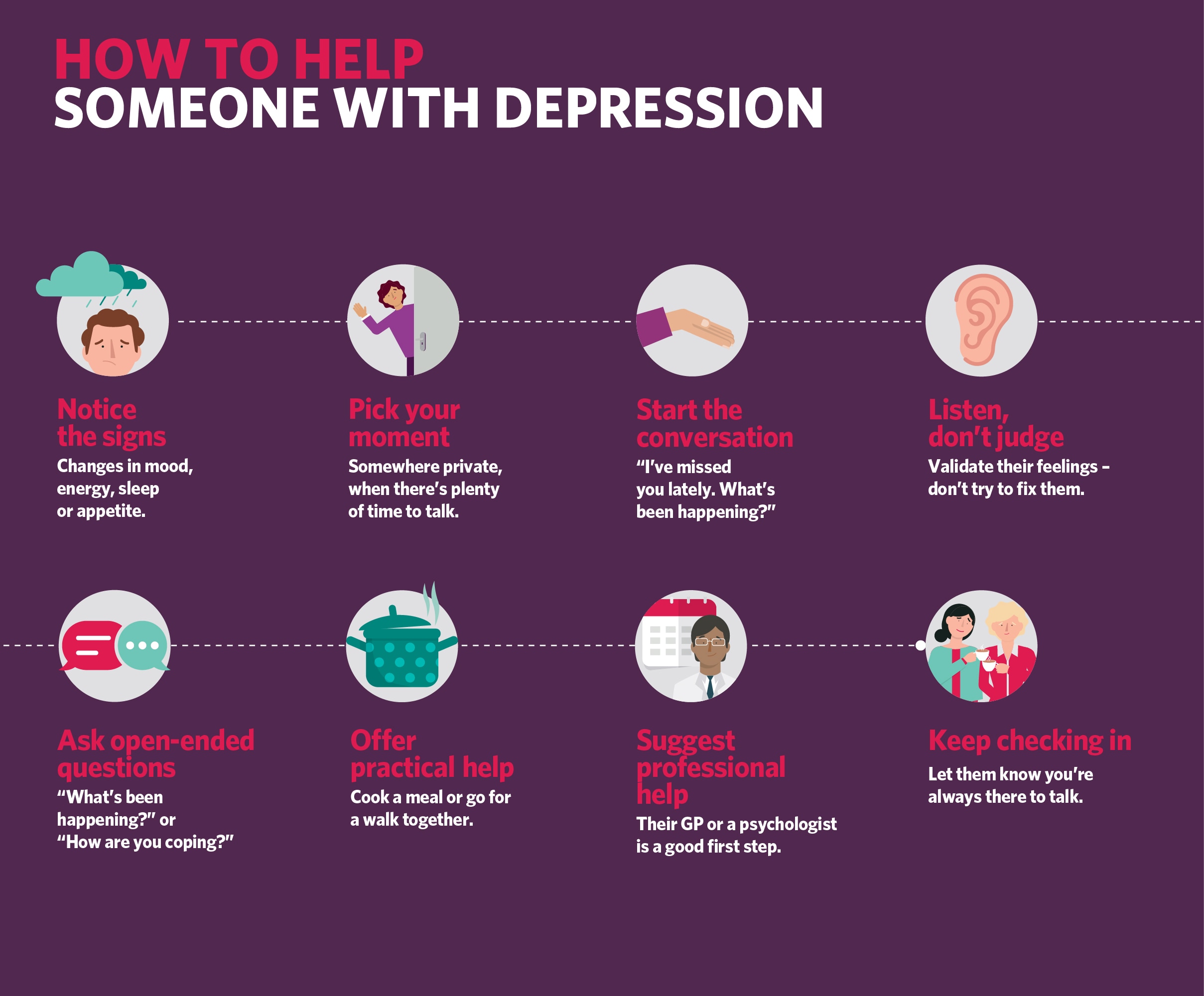
You also need to choose the right place – ideally somewhere private where you won’t be interrupted.
“Choose somewhere private and comfortable, and preferably where [the person] might feel at ease,” she says. “Put your phone away, so it doesn’t look like you’re ready to be distracted.”
What to say to someone with depression and what to avoid
DO: Talk about what you’ve noticed
Rather than assuming you know what’s wrong – or making definitive statements, accusations or diagnoses – gently mention changes you’ve noticed and ask how they’re feeling, says Dr Barnfield. The aim is to convey concern without making the person feel attacked.
Example: “I’ve noticed I haven’t seen much of you lately. Are you getting out much? How are you feeling?”
DON’T: Diagnose, accuse or judge
Try not to judge or dismiss what someone is going through or tell them to simply get on with it. “That just minimises someone’s experience,” Dr Barnfield says.
DO: Ask open-ended questions
Ask open-ended questions that invite your loved one to share their feelings.
Examples: “What’s been happening?” or “How are you coping?”
DON’T: Tell them they have nothing to be depressed about
Try not to judge the person’s experiences with statements like “You have a great life, what do you have to be depressed about?”
Instead, listen with an open mind and acknowledge that things sound tough. Don’t pressure them to talk. Sitting patiently with silence can create space for sharing.
Practical ways to help someone with depression
Encouraging someone to get professional help is the biggest priority, Dr Barnfield says. You could offer to take them to an appointment with a healthcare professional.
“Let them know what options are available. They could access their GP or visit a walk-in Medicare Mental Health Centre, which are around the country and readily available,” she says. If they’re in a workplace, talk to them about accessing the employee assistance program. Or help them tap into the resources that might be available through their health fund.
If they’re unsure where to start, helping them find an appropriate service and make an appointment can make it easier to take that first step. For eligible HCF members, a HealthyMinds Check-in* is one option. Eligible members on your policy can get an annual telehealth appointment with a psychologist from one of our partners anywhere in Australia. You have the flexibility to choose the psychologist that's right for you, at a time and day that fits your schedule, with appointments available up to 21 hours a day.
If a friend needs support, you could offer to prepare meals for them or suggest activities to distract them or keep their mind active, like going for a walk. Helping with cleaning and housework might be appropriate (if the person agrees), as well as encouraging them to slowly reintroduce activities into their routine.
Wondering how to help a partner with depression? Dr Barnfield recommends trying to reduce stress at home and helping them solve problems that crop up instead of avoiding them.
Whatever the nature of your relationship, check in regularly and let the person know their feelings are valid and help is available.
What to do if they don’t want help
Be prepared for the fact the other person might not be open to a mental health conversation. That doesn’t mean you’ve failed to help.
“It’s about making sure you’re providing a space for someone to feel comfortable enough where they can start to open up,” says Dr Barnfield. “And they might not want to, but down the track if they want to open up, they’re going to know you’re the person who is willing to have a conversation with them.”
Looking after yourself as a carer
Caring for another person can increase your chances of experiencing burnout – a state of emotional and physical exhaustion. Dr Barnfield says it’s essential to prioritise self-care.
This could involve a short walk or simply getting out into the fresh air. It’s also important to try to eat well and prioritise sleep.
Dr Barnfield recommends knowing your stress triggers and having strategies that help you unwind.
“It could be journalling and taking screen breaks to get away from your social media and doomscrolling,” she suggests. “You could also meditate.”
Need help right now?
If you need support for yourself or a loved one, the following services are available. In emergencies, always call 000.
- Lifeline (13 11 14): 24-hour crisis support and suicide prevention.
- Beyond Blue (1300 22 46 36): Mental health information, support and free 24/7 counselling.
- SANE (1800 187 263): Support, information and guided forums for people living with complex mental health conditions, and their families and carers.
- 13YARN (13 92 76): 24/7 Aboriginal & Torres Strait Islander crisis support line.
Helping a loved one find mental health support
Encourage your friend or family member to ask their GP for a mental health treatment plan, which lets them claim up to 10 individual and 10 group sessions through Medicare with an eligible mental health professional each calendar year, depending on their needs.
If they’re not eligible, or they’ve used up the 10 sessions, get them to check their extras policy to see if it’ll help with the cost of mental health services.
HCF members with eligible extras cover^ may be able to claim consultations with:
- a psychologist, if you don’t have a mental health treatment plan or you’ve used up your annual Medicare-rebated session limit under the plan
- an HCF-approved counsellor
- an accredited mental health social worker.
HCF members can also use eligible extras cover to claim towards a range of mental health services, including THIS WAY UP, which delivers online treatment programs to help you understand and improve challenges like stress, insomnia, depression, anxiety and chronic pain+.
Access online mental health services
Everyone’s mental health journey is different. Finding the right support for yourself or a loved one can often be challenging. A good place to start is with your GP, who can discuss whether a mental health treatment plan could help. We’re also here to support you with a range of mental wellbeing programs, as well as extras cover for eligible mental health services like cognitive behavioural therapy through THIS WAY UP+.
Related Articles
How does CBT work?
Practical and goal-driven, cognitive behavioural therapy (CBT) is one of the most widely used therapies. But how does CBT work and why is it so effective?
Can men get postnatal depression?
Although the term is commonly reserved for mums, experts agree many dads can also experience significant mood changes related to becoming a parent.
Supporting men’s mental health
A serious diagnosis can take a toll on men’s mental health. Discover expert advice on how to give the right support.
Health cover for mental health
From making GPs more accessible to providing treatment options for anxiety and depression, here’s how your health cover can support your mental wellbeing.
IMPORTANT INFORMATION
* Eligibility criteria apply. For more information, see hcf.com.au/mental-support
^ Waiting periods and annual limits apply. You may incur out-of-pocket expenses.
+ Available on selected covers. Waiting periods and annual limits apply. You may incur out-of-pocket expenses. You should make your own enquiries to determine whether this service is suitable for you. If you decide to use this service, it’ll be on the basis that HCF won’t be responsible, and you won’t hold HCF responsible, for any liability that may arise from that use. For more information, see hcf.com.au/mental-support
This communication contains information which is copyright to The Hospitals Contribution Fund of Australia Limited (HCF). It should not be copied, disclosed or distributed without the authority of HCF. Except as required by law, HCF does not represent, warrant and/or guarantee that this communication is free from errors, virus, interception or interference. All reasonable efforts have been taken to ensure the accuracy of material contained on this website. It’s not intended that this website be comprehensive or render advice. HCF members should rely on authoritative advice they seek from qualified practitioners in the health and medical fields as the information provided on this website is general information only and may not be suitable to individual circumstances or health needs. Please check with your health professional before making any dietary, medical or other health decisions as a result of reading this website.
