
Health Agenda
Healthy lunchbox ideas for every age
Published November 2026 | 5 min read
Expert contributor: Zahra Munas, HCF Health Coach
Words by Tegan Forder
Key takeaways
- Discover lunchbox ideas, simple swaps and healthy snacks that promote balanced lunches.
- A balanced lunchbox includes a mix of fruit and vegies, whole grains, dairy and lean protein to meet daily nutritional needs.
- Eat the nutritional ‘rainbow’ to make lunchboxes interesting and get the energy you need throughout the day.
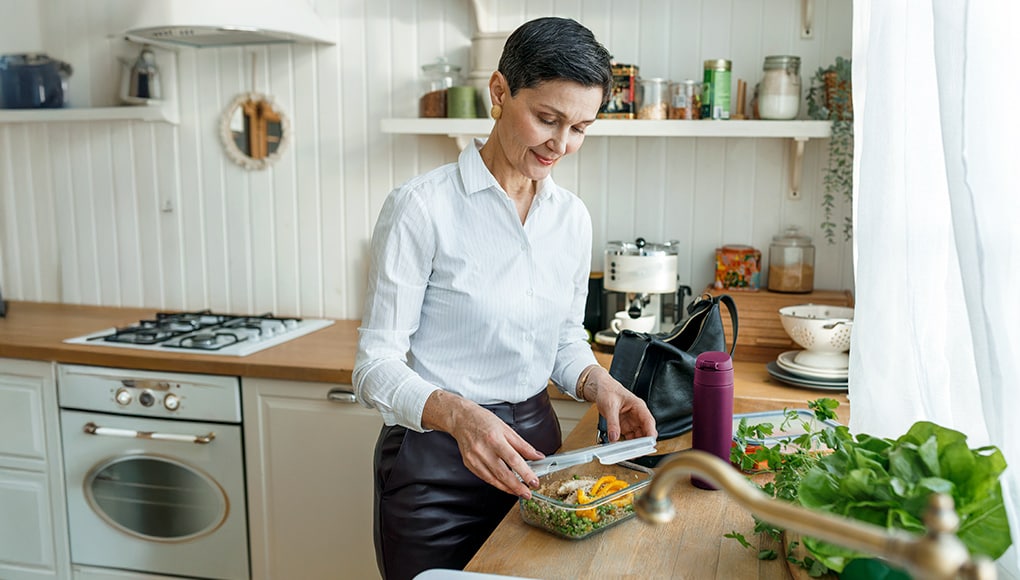
Stuck in a lunchbox rut? Accredited practising dietitian Zahra Munas shares simple lunchbox ideas for balanced, colourful meals for adults and kids.
Another morning, another lunchbox to fill. While it can feel a bit like Groundhog day, packing a simple, healthy and varied lunchbox for yourself or the kids can be done without the stress.
Accredited practising dietitian and HCF Health Coach Zahra Munas says a balanced lunchbox gives you the energy you need to stay healthy.
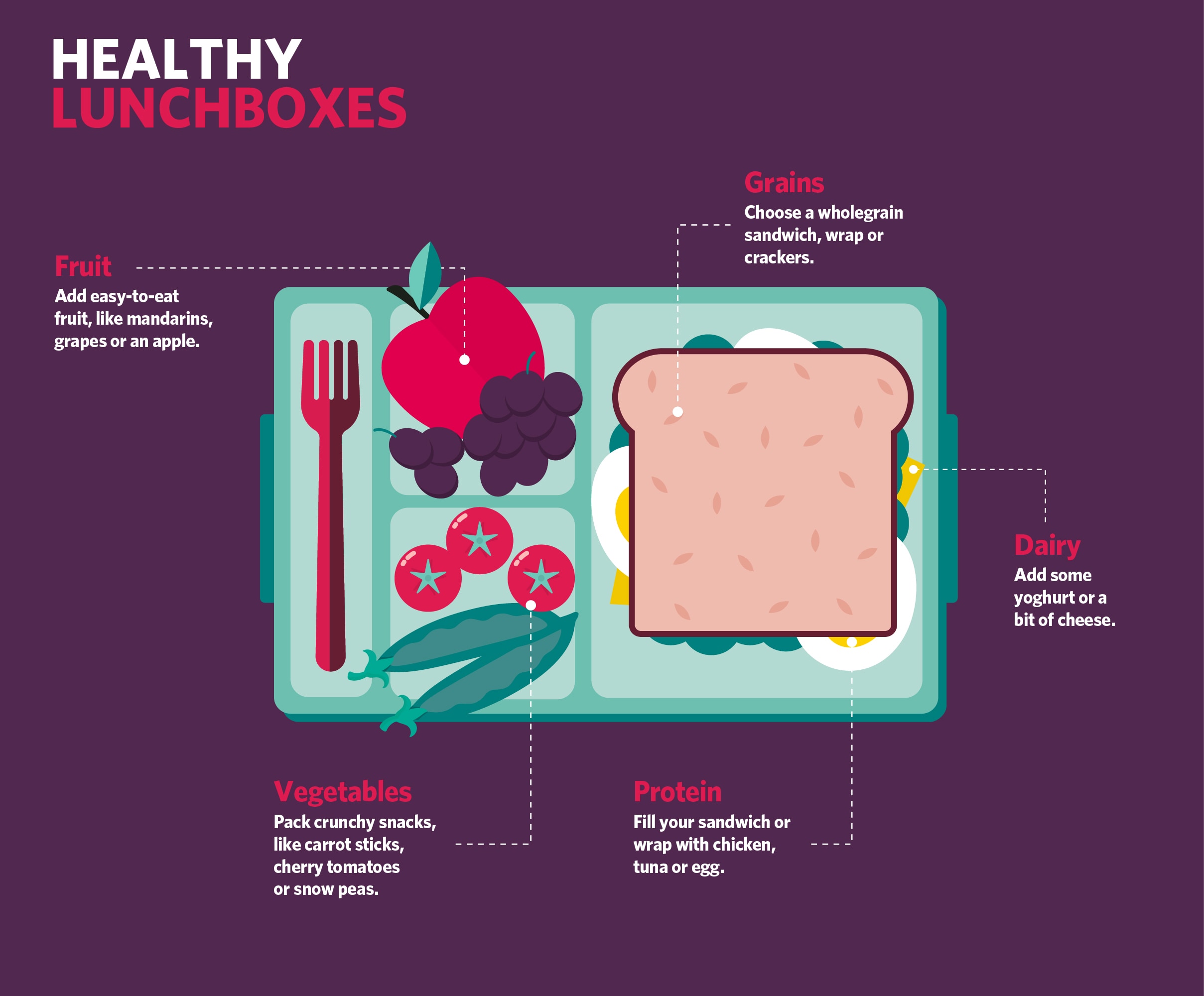
“Including a range of different coloured fruits and vegetables, whole grains, lean protein and dairy provides the nutrients from our main food groups to meet our daily requirements,” she says.
“Remember, we eat with our eyes – so have fun with packing a lunchbox and try to make it colourful and vibrant.”
Most of us repeat the same lunchbox staples because we’re short on time. If you’re looking for lunchbox ideas or wondering how to pack a healthy lunchbox (plus ease your mental load), Zahra shares simple ways to include the key food groups – plus a little treat.
What makes a healthy lunchbox?
When packing a healthy lunchbox, include a variety of items from the five food groups, advises Zahra.
“Both adults and children require whole grains, lean protein, dairy, fruits, vegetables and water to support a healthy mind, growth and development.”
Including something from all groups also helps us feel fuller for longer.
When working out how much to pack, follow the Australian Dietary Guidelines for adults and children on what we should be eating throughout the day:
Vegetables
- Adults: 5 to 6 serves
- Children: 4.5 to 5.5 serves
Fruit
- Adults: 2 serves
- Children: 1.5 to 2 serves
Grains
- Adults: 4 to 6 serves
- Children: 4 to 7 serves
Protein (lean meat, fish, eggs, legumes/beans)
- Adults: 2.5 to 3 serves
- Children: 1.5 to 2.5 serves
Dairy (milk, yoghurt, cheese)
- Adults: 2.5 to 4 serves
- Children: 2 to 3.5 serves
Why variety matters
Including a variety of foods from the main food groups can add excitement and nourishment while helping you meet your daily nutritional requirements. Zahra recommends thinking of it as eating the nutritional rainbow – and it can also help prevent lunchbox fatigue.
“Each time we eat across the day, include some protein, carbohydrate, fibre and water. That way our bodies will be able to absorb the nutrients gradually.”
One simple way to add variety and avoid falling into the same lunchbox routine is to plan meals and snacks so healthy options are on hand when you need them. Batch cooking can also help, allowing you to prepare a nutritious meal once and enjoy it multiple times, while mixing up what you pack each day.
Lunchbox ideas for every food group
It can be easy when you’re shopping to fall into the routine of selecting the same products without considering healthier alternatives.
Protein sources
- milk, yoghurt (frozen in summer) or small amounts of cheese
- lean meat in a sandwich or salad (select turkey, chicken or roast beef instead of processed meats like ham or salami)
- hard-boiled eggs
- legumes and beans in salads
- seeds.
Carb and grain options
- replace white bread with wholegrain, wholemeal or low GI wholegrain or wholemeal flatbreads
- wholegrain crackers
- brown rice or quinoa
- legume-based or buckwheat pasta.
Fruit and veg add-ins
- fresh or tinned fruit rather than dried
- salad with protein, carbs and good fat like avocado
- crunchy vegie sticks (carrot, capsicum, cucumber) with a dip like hummus or tzatziki
- legumes and beans added to soup
- grated vegetables in an omelette mixture and baked in muffin tins
- fruit skewers or use cookie cutters to make fun fruit shapes to dip into yoghurt.
Treats done well
- if you choose to include a treat, think about portion size and keep it small
- opt for a small fun-size chocolate or a few squares of dark chocolate
- add fresh, dried or frozen fruit to baked goods to reduce the amount of added sugar
- homemade muesli bars or bliss balls
- protein or nut bar.
Need more ideas? Eligible members can get access at a discount or at no extra cost to the evidence-based CSIRO Total Wellbeing Diet* or explore nutrition resources through Healthy Families for Life^.
Lunchbox snacks
Healthy snacks for kids
When packing healthy recess and between-meal snacks for kids, mix it up and make sure they’re easy for little hands to eat:
- Half a sandwich or roll
- Cut up fresh fruit and vegie sticks
- Pouches or small tubs of yoghurt
- Wholegrain crackers and dip
- Yoghurt-topped mini rice cakes
- Homemade trail mix of popcorn, wholegrain cereal and dried fruit
- Mozzarella string cheese or cheese cubes
- Savoury vegie muffins
- Corn fritters
- Chicken meatballs
- Reduced-fat dairy drinks.
Healthy snacks for adults
For adults, snacks should have a mix of protein, carbohydrates and fibre. For example:
- Vegie sticks or wholegrain pitas and a dip like hummus or tzatziki
- Trail mix with a few pretzels, unsalted nuts and dried fruit
- Protein bar
- Unsalted popcorn
- Dates with nut butter
- Apple with cheese
- Yoghurt with added nuts, seeds and fruit
- Canned tuna
- Roast or grilled chicken.
A note on safe lunchboxes and allergens
Lunchbox items can be susceptible to heat so, when possible, lunchboxes should be stored in the fridge during the day. For kids at school, lunchboxes should be kept out of direct sunlight and heat.
For hot days, consider packing an ice block with the lunchbox in a cooler bag to help keep chilled foods at the correct temperature, or avoid packing perishable foods like yoghurt.
Food allergies are another consideration when packing lunchboxes. Many schools have nut-free policies, meaning whole nuts or spreads like peanut butter aren’t allowed. While the National Allergy Council Best Practice Guidelines for Anaphylaxis Prevention and Management in Schools recommends an “allergy aware” approach rather than implementing food bans, some schools or early childhood centres will notify parents or carers if certain food or drinks need to be kept away from children and limited in the lunchbox.
Ready to shake up your lunchbox rotation? These healthy recipes from Lunchbox Bible by Julia Tellidis and Lauren Skora give you some simple ideas the whole family will love.
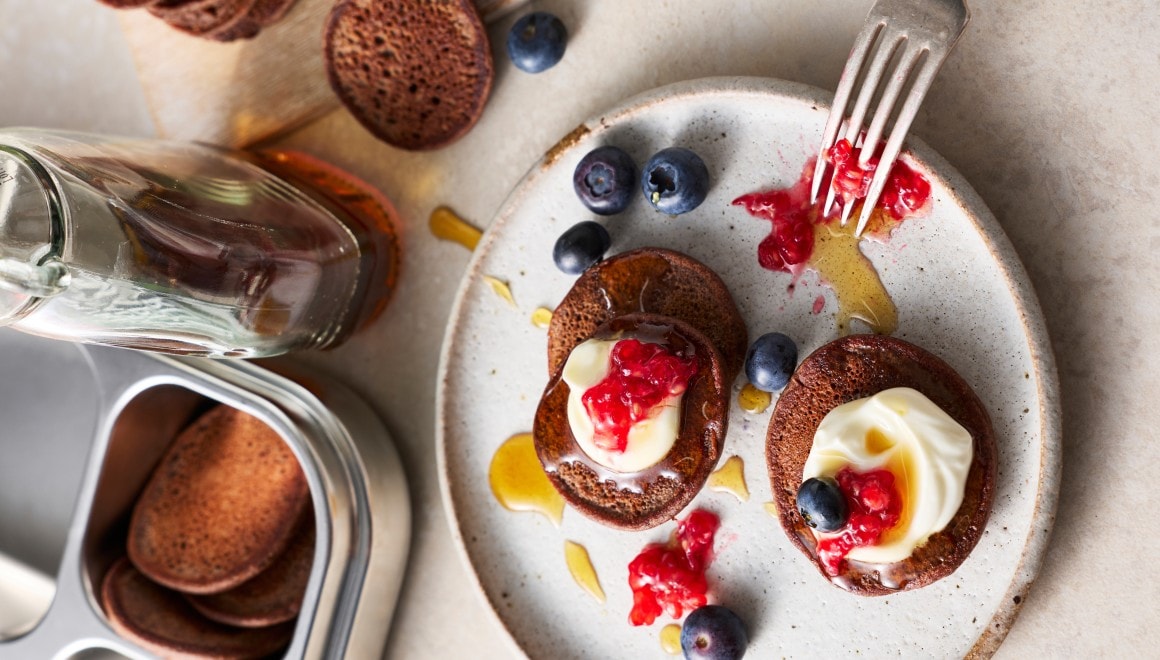
Brownie pancakes
Prep time: 5 minutes
Cook time: 20 minutes
Makes: 30
Ingredients
- 425g tinned black beans, drained and rinsed
- 2 eggs
- ½ cup milk of choice
- 1 overripe banana
- 2 tbsp maple syrup
- ⅓ cup rolled oats
- 1 tbsp raw cacao powder
- ½ tsp baking powder
- Pinch of salt
- 1 tbsp coconut oil or butter, for frying
Method
- Put all the ingredients except the oil into a blender and blitz until smooth.
- Melt the oil in a frying pan over medium heat and smear it over the pan with paper towel to evenly distribute. Pour 1-tablespoon portions of batter into the pan to make mini pancakes. (For larger pancakes, use 2-tablespoon portions.)
- Flip over when the pancakes start to bubble and no longer look gooey and cook the other side, about 1 to 2 minutes each side. Repeat with the remaining batter.
- Transfer to a wire rack and allow to cool completely before adding to a lunchbox.
Tips: To make these pancakes extra chocolatey, mix a few tablespoons of chocolate chips through the batter once blended. Pack cool or at room temperature, or warm in an insulated container. Store in the fridge for up to 3 days or in the freezer for up to 3 months.
Muesli bars and balls
Prep time: 10 minutes
Cook time (bars): 16 to 18 minutes
Chill time (balls): 1 hour
Makes: 10 bars or 20 balls
Ingredients
- 8 Medjool dates, pitted
- ¼ cup melted butter
- 1 tsp vanilla extract
- 2 tbsp water
- 1 cup rolled oats
- ½ cup desiccated coconut
- ½ cup sunflower seeds
- ¼ cup pepitas (pumpkin seeds)
- 2 tbsp chia seeds
- 2 tbsp hemp seeds
- Pinch of salt
- ¼ cup dark chocolate chips (optional)
Method
- If making muesli bars, preheat the oven to 180°C and line a loaf tin.
- In a blender or food processor, blend the dates, butter, vanilla extract and water until a thick, sticky paste forms. Add the rest of the ingredients (except the chocolate chips) and blend again until well combined and you have a chunky texture. Stir through the chocolate chips, if using.
- For no-bake muesli balls, simply roll into tablespoon-sized balls and place in the freezer to firm up.
- For the muesli bars, transfer the mixture into the loaf tin, pressing firmly and smoothing the top with a spatula or the back of a spoon. Bake for 16 to 18 minutes until golden, then remove from the oven and allow to cool for at least 10 minutes before slicing into fingers.
Tips: The no-bake muesli balls need to stay chilled, so use an ice brick in the lunchbox. Keep bars in the fridge for up to 1 week, while no-bake balls are best stored in the freezer, for up to 3 months.
Little buns
Prep time: 10 minutes
Cook time: 45 minutes (plus 20 minutes rest time)
Makes: 16
Ingredients
- ¾ cup sunflower seeds
- ½ cup pepitas (pumpkin seeds)
- 1½ cups rolled oats
- ½ cup hemp seeds
- 2 tbsp chia seeds
- ¼ cup psyllium husk
- ½ tsp salt
- 3 tbsp extra-virgin olive oil
- 1 tbsp maple syrup
- 1½ cups warm water
- Butter or spread, to serve
Method
- Blitz the sunflower seeds and pepitas in a blender until coarsely ground. (Skip this step if you prefer a more textured bread with a bit of crunch for children over 4.)
- Transfer to a large mixing bowl and add the oats, hemp seeds, chia seeds, psyllium husk and salt, and mix until combined.
- In a separate bowl, whisk together the olive oil, maple syrup and warm water.
- Pour the wet mixture into the dry ingredients and stir well until fully combined. Let the mixture rest in the bowl for 20 minutes to thicken.
- While the mixture is thickening, preheat the oven to 180°C and line a baking tray. Once the mixture has thickened, divide it into 16 portions and roll into small buns. Place on the tray and bake for 45 minutes, carefully flipping the buns with a spatula halfway through so the bottoms can crisp up.
- Cool before slicing and enjoy with some butter or your spread of choice.
Tips: Cool completely before packing to avoid sogginess. Pack with a side of butter, spread or avocado. Store in the fridge for up to 5 days or in the freezer for up to 3 months.
This is an edited extract from Lunchbox Bible.
Support to improve your family’s nutrition
Need more ideas to keep your kids eating well? We’ve partnered with Ethos Health to bring our members Healthy Families for Life and Healthy Teens for Life, which are resources to support kids, from birth to teens, to develop positive nutritional habits for growth and development and reduce the risk of chronic conditions in their future. Eligibility criteria apply^.
Related Articles
Healthy lunchbox ideas
Take the hassle out of the morning rush with these healthy lunchbox ideas and tips for making nutritious snacks – including these delicious chocolate muffins.
Easy homemade muesli bars
This tasty, homemade muesli bar is nutritious but sweet enough to still feel like a treat for morning tea.
Vegan banana bread
This vegan banana bread recipe is not only simple to make, it’s healthy, gluten-free and packed with flavour. Is it the best? We think so.
Easy healthy lunch ideas
A balanced and nutritious lunch can give you the energy you need and help manage hunger cravings. Our experts share healthy lunch ideas to try.
IMPORTANT INFORMATION
* Eligibility criteria apply. For more information, see hcf.com.au/csiro-total-wellbeing-diet
^ Eligibility criteria apply. For more information, see hcf.com.au/healthyfamilies
This communication contains information which is copyright to The Hospitals Contribution Fund of Australia Limited (HCF). It should not be copied, disclosed or distributed without the authority of HCF. Except as required by law, HCF does not represent, warrant and/or guarantee that this communication is free from errors, virus, interception or interference. All reasonable efforts have been taken to ensure the accuracy of material contained on this website. It’s not intended that this website be comprehensive or render advice. HCF members should rely on authoritative advice they seek from qualified practitioners in the health and medical fields as the information provided on this website is general information only and may not be suitable to individual circumstances or health needs. Please check with your health professional before making any dietary, medical or other health decisions as a result of reading this website.
