
Health Agenda
Build your own healthy bowls with these tasty tips
Updated April 2026 | 5 min read
Expert contributor: Claudia Ongko, accredited practising dietitian and HCF Health Coach
Words by Tegan Forder
Bowl meals are a simple, delicious way to enjoy your favourite foods. Build balanced, healthy bowls full of flavour with these dietitian-approved tips.
Colourful and convenient, healthy bowls make a simple and satisfying meal when out and about or at home.
“Bowls are a great meal option,” says accredited practising dietitian and HCF Health Coach, Claudia Ongko.
“Made up of different grains, protein and plenty of colourful vegetables mixed with sauce or dressings, served in one bowl, they’re appealing, nutritious and versatile.”
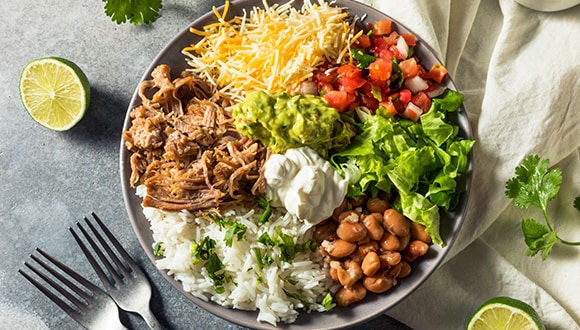
Healthy bowl recipes to try
“Bowls can be customised to nearly all cuisines,” says Claudia. “You can mix and match different bases to create endless combinations.”
Here are some bowl recipes you could try for lunch or dinner.
- Burrito or taco bowls: Rice, beans (like black beans and kidney beans), grilled chicken or beef with salsa, corn and guacamole.
- Poke bowls: Often made with marinated, diced raw fish and served with cucumber, edamame, seaweed and avocado.
- Mediterranean grain or buddha bowls: Quinoa or brown rice with chicken, falafel, salmon or legumes with a variety of roasted and fresh vegies.
- Noodle or rice bowls: Soba noodles with tofu, beef or chicken and salad – or try brown rice, baked salmon, vegies, avocado, edamame and sesame seeds.
For breakfast, opt for a yoghurt, smoothie or porridge bowl or try a savoury version made with scrambled eggs, sauteed vegetables, roasted sweet potatoes and avocado.
A word of caution on the popular acai bowl: they can contain a lot of sugar depending on the base and toppings used.
Building a food bowl: the basics
“A well-constructed bowl brings together all the key food groups in the appropriate proportion to provide long-lasting energy and a variety of nutrients which supports gut health,” says Claudia.
Start with the base
Choose slow-digesting, low-glycaemic index (low GI) carbohydrates like brown rice, quinoa, barley, oats, corn, sweet potatoes, legumes, wholemeal pasta or soba noodles to provide steady energy.
Add lean protein
Grilled chicken, lean beef, fish, eggs, cheese, tofu, falafel or beans are important for muscle repair and keeping you satisfied.
Make it a rainbow
Add at least two different-coloured vegies like leafy salad greens, carrots, tomatoes, capsicum, cucumbers, zucchini and broccoli to boost fibre, vitamins and antioxidants.
Finish with healthy fats
Include a small amount of avocado, nuts, seeds, tahini or olive oil to keep you satiated.
Tips for building bowl meals
With a few simple strategies, Claudia says you can build nourishing bowls that are balanced, tasty and easy to prepare.
Control your portions
To make a balanced meal, fill at least half your bowl with colourful vegies and a quarter with protein - like a palm-sized amount of chicken, meat or fish, or a cup of cooked beans. Complete your bowl with a quarter of carbohydrates, like half to 1 cup of cooked whole grains, and add 1 to 2 tablespoons of healthy fats.
Stock your pantry
Make it easier to assemble a quick and healthy bowl by keeping a mix of fresh, frozen or dry staples on hand, including the following combination of foods:
- Brown rice, quinoa, soba noodles, wholemeal pasta, sweet potatoes or beans.
- Fresh or canned fish, chicken, lean beef, tofu, eggs, cheese.
- Lettuce, spinach, cabbage, capsicum, tomatoes, corn or pumpkin.
- Olive oil, avocado, nuts, seeds, herbs and spices.
Prep ahead
“You can prepare each of the meal components ahead of time and mix and match across the week to increase variation,” says Claudia. This might mean cooking proteins and carbohydrates in batches and storing them in the fridge or chopping fresh vegies – perhaps roasting them – then refrigerating them in airtight containers.
Add a dressing
A great sauce or dressing ties all the ingredients together. Avoid overloading on sugar, salt and fats – try tzatziki, hummus, an olive oil-based dressing or chimichurri.
Need some bowl-making inspiration? This Middle Eastern chicken and rice power bowl from Shred Happens: So Easy, So Good by Arash Hashemi is an easy recipe for busy weeknights or lazy weekends.
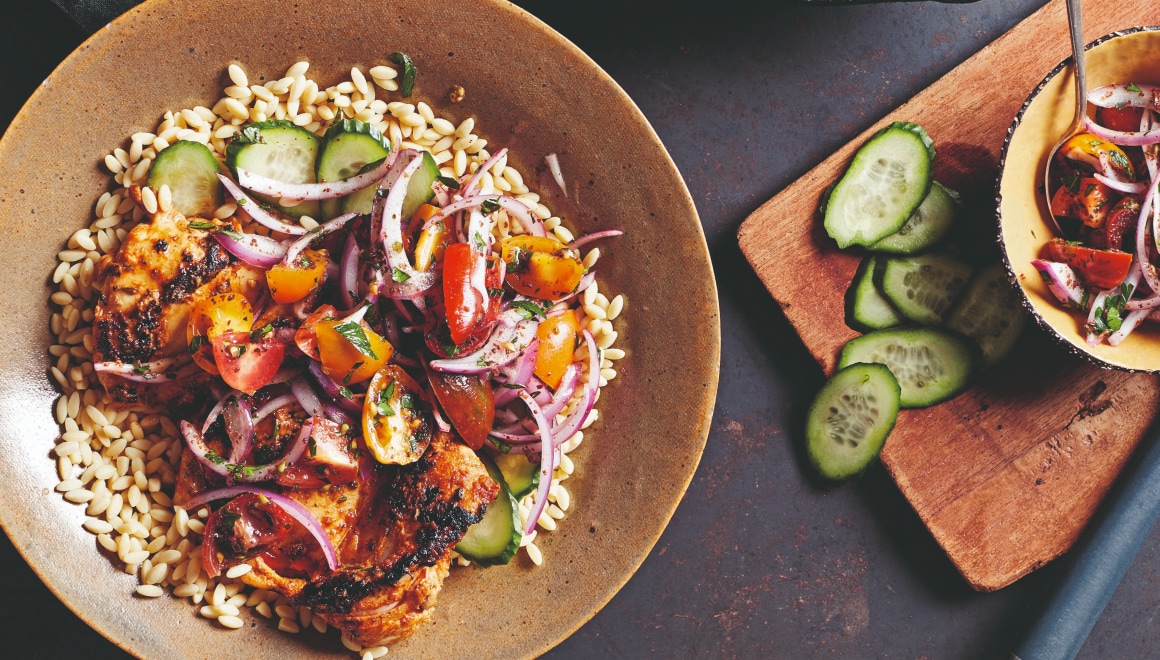
Middle Eastern chicken and rice power bowl
Prep time: 30 minutes, plus 4 to 6 hours marinating
Cooking time: 15 minutes
Serves: 4 to 6
Ingredients
- 900g boneless, skinless chicken thighs
- 2½ tbsp olive oil
- 1 tbsp smoked paprika
- 1 tbsp garlic powder
- 1 tbsp dried thyme
- ½ tbsp crushed chilli flakes
- ½ tsp ground cumin
- ¼ tsp ground cinnamon
- 2 tbsp plain yoghurt
- 5 tbsp freshly squeezed lemon juice
- Salt and freshly ground black pepper
- 225g Kaizen rice or regular basmati rice
- 2 Lebanese or mini cucumbers, finely sliced (optional)
For the salad
- 1 red onion, thinly sliced
- 10 cherry tomatoes, cut in quarters
- 2 tbsp finely chopped fresh parsley
- 2 tbsp sumac
- 5 tbsp freshly squeezed lemon juice
- Salt and freshly ground black pepper
For the white sauce
- ¼ cup plain yoghurt
- 3 tbsp mayonnaise
- 3 to 4 tbsp pickle juice* or 1½ to 2 tbsp red wine vinegar
- 2 tbsp finely chopped fresh dill
- Salt and freshly ground black pepper
* You can buy pickle juice online or in health stores.
Method
- Place the chicken thighs in a bowl and drizzle with 1½ tablespoons of the olive oil. Season with the smoked paprika, garlic powder, thyme, chilli flakes, cumin, cinnamon, yoghurt, lemon juice and salt and pepper. Mix well.
- This can be cooked right away, but ideally, let this marinate in the fridge for 4 to 6 hours before cooking it.
- If marinating the chicken in the fridge, take it out 30 minutes before you want to cook it. While it’s coming to room temperature, prepare your toppings.
- For the salad: In a large bowl, combine all the ingredients. Mix well, then set aside.
- For the white sauce: In a small bowl, combine all the ingredients. Mix well, taste and adjust if needed.
- Heat the remaining 1 tablespoon of olive oil in a cast-iron pan over medium heat.
- When the oil is hot, add the chicken and sear it for about 4 minutes on each side first, then flip and cook for another 1 to 2 minutes on each side again, depending on the thickness of the thighs, until the outside is golden brown and the inside is fully cooked with no pink remaining.
- Cook the rice per the instructions on the packaging.
- When the rice is cooked, add a serving of it to a bowl, place 1 or 2 seared thighs on top, then pile it high with the salad, add some sliced mini cucumbers (if using) and drizzle with the white sauce.
Discover more recipes and nutrition advice
Want more meal ideas? Eligible members can get free access or save on the evidence-based CSIRO Total Wellbeing Diet^. Created by Australia’s national science agency, it combines a high-protein, low-GI eating plan with exercise and proven weight management tools to help improve habits and create lifelong positive behaviours.
More Recipes
Healthy breakfast ideas
These delicious healthy breakfast ideas will get your day off to a great start – and could have longer term benefits, too.
9 heart-healthy foods
Maintaining a heart-healthy diet is one of the most effective ways to reduce your risk of heart disease. Here’s how to eat your way to a healthier heart.
One-pan chicken and couscous recipe
Need a simple and tasty dinner? Try this one-pan chicken and couscous recipe and learn practical ways to make home cooking easier.
Lunch ideas on a budget
Tired of unhealthy takeaway or the same old sandwich? These cheap and healthy lunch ideas will give you all the nutrients you need to take on the afternoon.
IMPORTANT INFORMATION
^ Eligibility criteria apply. For more information, see hcf.com.au/csiro-total-wellbeing-diet
This communication contains information which is copyright to The Hospitals Contribution Fund of Australia Limited (HCF). It should not be copied, disclosed or distributed without the authority of HCF. Except as required by law, HCF does not represent, warrant and/or guarantee that this communication is free from errors, virus, interception or interference. All reasonable efforts have been taken to ensure the accuracy of material contained on this website. It’s not intended that this website be comprehensive or render advice. HCF members should rely on authoritative advice they seek from qualified practitioners in the health and medical fields as the information provided on this website is general information only and may not be suitable to individual circumstances or health needs. Please check with your health professional before making any dietary, medical or other health decisions as a result of reading this website.
