
Health Agenda
How to manage IBS with the low FODMAP diet
Published May 2026 | 5 min read
Expert contributor: Associate Professor Jane Muir, Head of Translational Nutrition Science, Monash University
Words by Tegan Forder
Key takeaways
- The low FODMAP diet is a proven treatment for symptoms caused by irritable bowel syndrome (IBS).
- Following the three-step low FODMAP diet may help you work out which foods trigger gut issues, so you know what to avoid.
- The diet should be followed short term under guidance from a GP and dietitian.
- Try two low FODMAP recipes: vegie bake and lamb koftas.
The low FODMAP diet is a proven approach to managing IBS. Learn from an expert how it works, which foods to eat and avoid, and how to follow it safely.
Around 30% of Australians live with the symptoms of irritable bowel syndrome (IBS).
While there is no known cause of this condition, many people see improvements when they avoid foods containing FODMAPs – a group of naturally occurring sugars that are hard to digest.
To counter symptoms and allow people to live a more comfortable life, Monash University researchers developed the Monash University Low FODMAP Diet™ after identifying which foods might irritate the gut.
How does a low FODMAP diet work?
When FODMAPs – fermentable oligosaccharides, disaccharides, monosaccharides and polyols – are eaten, they move slowly through the small intestine and draw in water. When they reach the large intestine, gut bacteria rapidly ferment them, which produces gas that can lead to bloating, constipation, diarrhoea and pain.
“Because people with irritable bowel syndrome have a highly sensitive gut, ‘stretching’ the intestinal wall causes exaggerated sensations of pain and discomfort,” explains Associate Professor Jane Muir, Monash University Head of Translational Nutrition Science.
Studies by Monash University researchers show a low FODMAP diet – where certain foods are avoided – can help 75% of people with IBS better manage their symptoms.
“Our findings have since been replicated by dozens of research groups globally, and the experience of patients using this diet has been overwhelmingly positive,” says Assoc Prof Muir.
Low FODMAP diet foods to eat and avoid
The Monash University Low FODMAP Diet™ suggests swapping high FODMAP foods for low FODMAP alternatives.
Low FODMAP foods to eat
- Vegetables: eggplant, green beans, bok choy, green capsicum, carrot, cucumber, lettuce, potato, bean shoots, zucchini.
- Fruits: rockmelon (cantaloupe), kiwi fruit (green), mandarins, oranges, pineapple, blueberries, strawberries.
- Dairy and alternatives: almond milk, soft cheeses, hard cheeses, lactose-free milk.
- Proteins: eggs, firm tofu, plain cooked meats/poultry/seafood, tempeh.
- Breads and cereals: gluten-free cornflakes, oats, quinoa flakes, pasta made from quinoa, rice or corn, rice cakes, sourdough spelt bread, breads free from wheat, rye or barley.
- Sugars and sweeteners: dark chocolate, maple syrup, rice malt syrup, table sugar.
- Nuts and seeds: macadamias, peanuts, pumpkin seeds, walnuts.
High FODMAP foods to avoid
- Vegetables: artichoke, asparagus, cauliflower, garlic, onion, green peas, mushrooms.
- Fruits: apples, cherries, dried fruit, mango, nectarines, peaches, pears, plums, watermelon.
- Dairy and alternatives: cow’s milk, custard, ice-cream, yoghurt, cottage cheese, ricotta cheese, soy milk.
- Proteins: most legumes or pulses, some marinated or breaded meats, poultry or seafood, some processed meats (like sausages).
- Breads and cereals: breads, breakfast cereals, biscuits and snacks that are based on wheat, rye or barley.
- Sugars and sweeteners: honey, high-fructose corn syrup, artificial sweeteners with sugar alcohols (polyols).
- Nuts and seeds: cashews, pistachios.
The low FODMAP diet for beginners
Follow the 3-step guide
Step 1: Test for trigger foods
For two to six weeks, swap high FODMAP foods for mostly low FODMAP alternatives to see if this begins to control the symptoms of IBS.
Step 2: Reintroduce foods slowly
If symptoms have improved, start reintroducing one FODMAP food at a time in a ‘FODMAP challenge’ over eight to 12 weeks. This will help work out what your body can tolerate.
Step 3: Tailor the right plan for you
Now you know which FODMAPs you can eat and which trigger IBS symptoms, you can establish a minimally restrictive ‘personalised FODMAP diet’.
“The goal is always to liberalise the diet as much as possible while controlling symptoms,” says Assoc Prof Muir.
How to get started
If you’re experiencing gastrointestinal symptoms, seek advice from your GP. Our partnership with GP2U, an online video GP service, makes it easier for eligible members* to access telehealth services, including a standard GP consultation (up to 10 minutes) for a fee of $50. Eligible rural and remote members^ can access an annual 15-minute online GP consult with GP2U, at no extra cost.
A doctor can help determine whether your symptoms are caused by IBS or another medical condition like:
- coeliac disease
- endometriosis
- bowel cancer.
If you’re diagnosed with IBS, talk to a trained dietitian to explore what type of diet therapy is best for you.
Assoc Prof Muir stresses that following a low FODMAP diet is not a lifestyle choice but rather a short-term, evidence-based process to help people with medically diagnosed IBS.
“If people follow the low FODMAP diet as a lifestyle, without supervision, they risk unnecessary food restriction and potential impacts on diet quality,” she says.
You can follow a low FODMAP diet with the support of the Monash University FODMAP Diet App.
Ready to explore some low FODMAP recipes? The step 1-friendly vegie bake and spiced Middle Eastern lamb koftas below have been adapted from recipes in The Beauty Chef Gut Guide by Carla Oates, author of Feeding Your Skin and The Beauty Chef.
Vegetable, tapenade and béchamel bake (step 1-friendly)
Prep/cook time: 100 minutes plus cooling time
Serves: 4
Ingredients
- 400g (about 2 medium) green capsicum
- 300g (about 1 medium) sweet potato, peeled and cut lengthways into 1.5cm slices
- 240g (about 2 small) zucchini, trimmed and cut lengthways into 1cm slices
- Extra virgin olive oil, for cooking
- 300g (about 1 medium) eggplant, trimmed and cut lengthways into 1cm slices
Béchamel sauce
- 2 tbsp cultured butter or extra virgin olive oil
- 30g (¼ cup) arrowroot
- 625ml (1½ cups) almond milk, heated
- 3 tbsp nutritional yeast flakes, plus extra for sprinkling
- Sea salt, to taste
Tapenade
- 75g (½ cup) pitted kalamata olives
- 3 handfuls flat-leaf (Italian) parsley leaves
Method
- Preheat the oven to 200°C.
- Place the capsicums, sweet potato and zucchini on an oven tray. Drizzle olive oil on the sweet potato and zucchini slices.
- Roast the zucchini for 15 to 20 minutes until just tender, then remove from the tray and set aside. Roast the sweet potato for 20 to 25 minutes until just tender, then remove from the tray and set aside. Roast the capsicums for 35 to 40 minutes until the skin is blistered and the flesh has softened. Put in a bowl, cover and set aside to cool, then peel, de-seed and cut lengthways into 2cm slices.
- Preheat a large frying pan over a medium to high heat. Drizzle the eggplant with oil and cook for 1 to 2 minutes on each side until browned and tender. Transfer to a plate and set aside.
- Decrease the oven temperature to 180°C.
- For the béchamel sauce, melt the butter or oil in a medium saucepan over a low to medium heat. Add the arrowroot. Cook for 1 minute, stirring with a wooden spoon until it begins to foam. Switch to a whisk and gradually pour in the almond milk, whisking continuously until well incorporated to prevent lumps. Add the yeast flakes. Continue to whisk, increase the heat to medium and cook for 3 to 5 minutes until thick enough to coat the back of a spoon. Season with salt. Cover with a piece of baking paper and set aside.
- To prepare the tapenade, blend the olives and parsley in a small food processor until finely chopped. Alternatively, finely chop by hand and mix in a small bowl. Set aside.
- To assemble, put a layer of sweet potato in the base of a 20×20cm square baking tray or ovenproof dish. Pour over a thin layer of béchamel, add a layer of zucchini, then the tapenade. Next, add a layer of capsicum, another thin layer of béchamel, then finish with a layer of eggplant and cover with the remaining béchamel. Sprinkle with yeast flakes.
- Cover with foil and bake for 30 minutes, then uncover and bake for a further 10 minutes, or until the surface is golden. Slice to serve.
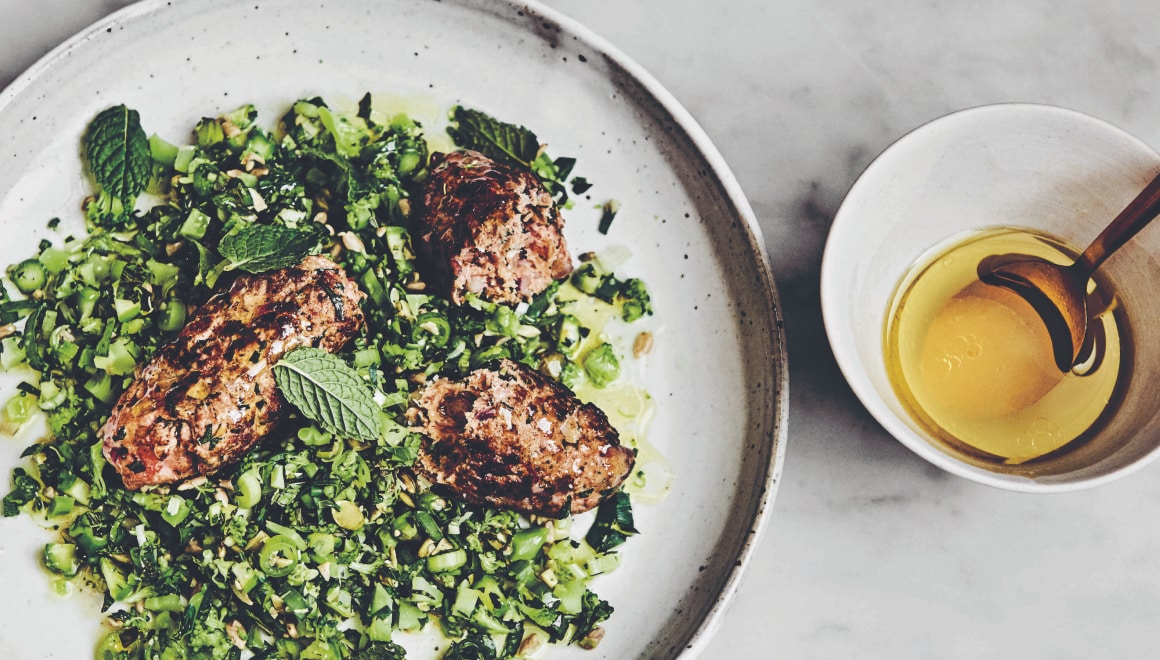
Spiced Middle Eastern lamb koftas (step 1-friendly)
Prep time: 30 minutes (includes 20 minutes refrigerating)
Cook time: 10 minutes (plus 5 minutes resting)
Serves: 4 (makes 8 koftas)
Ingredients
- 500g organic lamb mince
- 2 sping onions (green part only)
- 1 large handful flat-leaf (Italian) parsley leaves, coarsely chopped
- 1 large handful mint, coarsely chopped
- 1 to 2 tbsp garlic-infused oil
- ½ long red chilli, finely chopped
- 2 tsp ground cumin
- 2 tsp ground coriander
- ½ tsp ground cinnamon
- ½ tsp sea salt
- ½ tsp freshly ground black pepper
- Coconut oil or ghee (for cooking)
Method
- In a large bowl, combine all ingredients except the coconut oil (or ghee) and mix thoroughly with clean hands.
- Shape the mixture into 8cm-long (about ¼ cup each) sausages. Flatten lightly and place on a tray. Cover and refrigerate for 20 minutes or until firm.
- Preheat a large frying pan over a medium heat. Brush the koftas with coconut oil or melted ghee. Cook, turning once, for 8 to 10 minutes or until just cooked through. Transfer the koftas to a tray, cover with foil and allow to rest for 5 minutes.
This is an edited extract from The Beauty Chef Gut Guide by Carla Oates, published by Hardie Grant Books. Recipe photography by Rochelle Eagle.
Discover healthy recipes and nutrition advice
Looking for support to eat well and feel your best? Eligible members can get free access or save on the evidence-based CSIRO Total Wellbeing Diet#. Created by Australia’s national science agency, it combines a high-protein, low-GI eating plan with exercise and proven weight management tools to help improve habits and create lifelong positive behaviours. While the CSIRO Total Wellbeing Diet doesn't offer a FODMAP-friendly program, it can help you find food swaps if you have intolerances and allergies.
Related Articles
IBS causes, symptoms and treatment
Knowledge about what causes IBS has improved significantly over the years. Here are the latest ways to identify and manage this digestive condition.
Do you have a food intolerance?
For many Aussies, certain foods can pose problems for our wellbeing. Here’s how to tell if you might have a food intolerance, and steps you can take.
How to improve your gut health
What goes on in your gut can affect your overall wellbeing. Here’s what you need to know about identifying gut issues and how to take steps towards fixing them.
How to read food labels
Want to make healthier food choices? Understanding food labels is an important first step. Here’s how to increase your nutritional know-how and shop smarter.
IMPORTANT INFORMATION
* Eligibility criteria apply. For more information, see hcf.com.au/gp2u
^ Available to members with HCF hospital and/or extras cover, who live in a non-metropolitan MM2-MM7 classified postcode (see the list at here for eligible postcodes). Excludes Accident Only, Ambulance Only and Overseas Visitors Health Cover. Eligible members under 16 years old may need to have a parent or guardian present. If you have any questions about this eligibility criteria, please email wellbeing@hcf.com.au
# Eligibility criteria apply. For more information, see hcf.com.au/csiro-total-wellbeing-diet
This communication contains information which is copyright to The Hospitals Contribution Fund of Australia Limited (HCF). It should not be copied, disclosed or distributed without the authority of HCF. Except as required by law, HCF does not represent, warrant and/or guarantee that this communication is free from errors, virus, interception or interference. All reasonable efforts have been taken to ensure the accuracy of material contained on this website. It’s not intended that this website be comprehensive or render advice. HCF members should rely on authoritative advice they seek from qualified practitioners in the health and medical fields as the information provided on this website is general information only and may not be suitable to individual circumstances or health needs. Please check with your health professional before making any dietary, medical or other health decisions as a result of reading this website.
