
Health Agenda
Eating well as you age: Food to support your strength and health
Published April 2026 | 5 min read
Expert contributor: Liz Radicevic, accredited practising dietitian
Words by Angela Tufvesson
Key takeaways:
- Up to half of older Australians are at risk of malnutrition.
- Adding certain foods to your diet can help support strength and overall health as you get older.
- Protein, calcium and fibre are some of the key nutrients that can help keep your body strong and resilient over time.
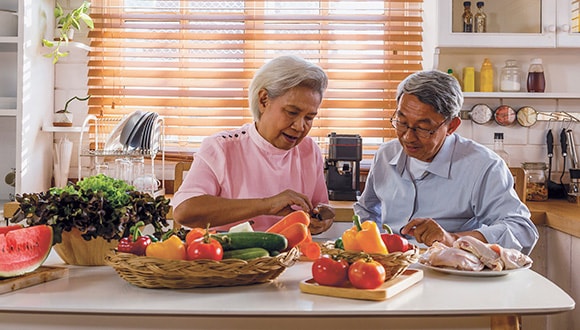
Our nutritional needs change as we age. Here’s how to make every bite count with foods that fight ageing.
It’s common to eat less as you get older. You might feel full quicker than you used to, and skipping meals like breakfast can sometimes become a habit. This can make it harder to get all the nutrients your body needs, increasing the risk of malnutrition.
Research shows up to one in two older Australians are at risk of malnutrition or are malnourished.
For those who are underweight or losing muscle, understanding how to put on weight healthily is an important part of maintaining strength and independence.
Eating a nutritious diet is just as important as when you were younger – it’s just that the types of foods your body needs change with age. Including the right nutrients and foods that fight ageing in your diet can help keep your body strong and healthy as you get older.
Healthy eating for seniors: How nutritional needs change with age
As you get older, you might eat less food because you’re less active than when you were younger. Medications and dental issues can also affect how much you feel like eating. But you still need a similar amount of nutrients – or perhaps more.
Accredited practising dietitian Liz Radicevic says “making every bite count” is the best way to make sure your diet is nutrient-rich. “People often think they need to eat more food to get more nutrients, but that’s not necessarily the case. Choosing nutrient-dense foods is a great strategy,” she explains.
Aim to eat a variety of fruits, vegetables, meat, fish, eggs, legumes, dairy foods and wholegrain breads and cereals. Use less salt and limit foods containing saturated fats like chips and chocolate.
“Smaller, more regular meals and eating with other people can help you enjoy your food more and make it easier to get the nutrients your body needs,” Liz says.
The recommended average daily number of serves from each of the five food groups changes as we get older.
Daily serves for women aged 51 to 70
Vegetables and legumes or beans: 5 serves
Fruit: 2 serves
Grain (cereal) foods, mostly wholegrain: 4 serves
Lean meat and poultry, fish, eggs, nuts and seeds, and legumes/beans: 2 serves
Milk, yoghurt, cheese and/or alternatives: 4 serves
Daily serves for women aged 70+
Vegetables and legumes or beans: 5 serves
Fruit: 2 serves
Grain (cereal) foods, mostly wholegrain: 3 serves
Lean meat and poultry, fish, eggs, nuts and seeds, and legumes/beans: 2 serves
Milk, yoghurt, cheese and/or alternatives: 4 serves
Daily serves for men aged 51 to 70
Vegetables and legumes or beans: 5.5 serves
Fruit: 2 serves
Grain (cereal) foods, mostly wholegrain: 6 serves
Lean meat and poultry, fish, eggs, nuts and seeds, and legumes/beans: 2.5 serves
Milk, yoghurt, cheese and/or alternatives: 2.5 serves
Daily serves for men aged 70+
Vegetables and legumes or beans: 5 serves
Fruit: 2 serves
Grain (cereal) foods, mostly wholegrain: 4.5 serves
Lean meat and poultry, fish, eggs, nuts and seeds, and legumes/beans: 2.5 serves
Milk, yoghurt, cheese and/or alternatives: 3.5 serves
Protein: Why muscle health matters more with age
Protein is important for maintaining muscle and bone mass, which helps to prevent falls. “Protein is essential for staying strong and independent as we age,” Liz explains.
How much protein do older adults need each day
To prevent muscle loss and maintain strength, older people need more protein than younger adults. Women over 70 need 46g per day compared to 37g per day for women between 19 and 70. Men over 70 need 65g per day compared to 52g per day for men between 19 and 70 years old.
What are the best protein sources for people over 50?
Protein-rich foods include meat, chicken, fish, eggs, dairy products and soy products like tofu or soy milk. Nuts, legumes and whole grains also contain protein.
Calcium: Supporting strong bones and mobility
Calcium is key for bone health, which is especially important as we get older. More than 65% of adults over 50 have osteoporosis or osteopenia. “Dairy foods, fortified plant milks and canned fish with bones are good sources of calcium,” Liz says.
Why your calcium needs increase with age
As we age, our bones lose calcium, with women experiencing faster losses around menopause. Men and women absorb less calcium over time, and getting enough from your diet helps to slow age-related bone loss.
How vitamin D helps your body absorb calcium
Vitamin D helps the body absorb calcium from the intestines – but many people don’t get enough, especially during the cooler months. “Many older adults have low levels of vitamin D because our body’s ability to synthesise it from sunlight declines with age,” Liz explains. Sunlight is the best source of vitamin D, but oily fish, eggs and some mushrooms are good dietary sources.
Fibre: Supporting digestive health in older adults
Fibre keeps your intestines healthy and supports healthy digestion.
Why do you need more fibre as you get older?
The digestive system slows down as we age, so a high-fibre diet is important. “Fibre is one of the most overlooked nutrients in healthy ageing,” Liz says.
Which foods are high in fibre?
Fruits, vegetables, whole grains, legumes, nuts and seeds are great sources of fibre.
How vitamins B6 and B12 help meet the nutritional needs of seniors
Of the B-group vitamins, Liz says vitamins B6 and B12 are among the most important as we get older. “B6 is important for the protein metabolism, nervous system function and immune function, while B12 is crucial for brain health and energy levels,” she explains. “Our absorption declines with age.”
Liz says good sources of B6 include fish, poultry, potatoes, bananas, whole grains, nuts and seeds. Meat, fish, eggs, milk, cheese and some fortified cereals are rich in B12.
If you’re considering taking vitamin B6 supplements, be mindful of potential toxicity risks. Always be guided by your healthcare professional when it comes to taking health supplements.
When to get professional advice
Losing weight or muscle, pale skin, wounds that don’t heal, hair loss and falls can be signs you’re not getting enough nutrients in your diet. A GP or dietitian can provide tailored guidance on healthy eating for seniors. Through our partnership with GP2U, eligible members can book an online standard GP consultation (up to 10 minutes) for $50* for a range of services to help you get access to care when you need it.
Complete our 5-minute survey to see if you’re eligible for HCF's Healthy Ageing program for personalised falls risk support.
Eat well at every stage of life
As your nutritional needs change with age, the right eating plan can help you stay strong and well. Eligible members can get free or discounted access to the evidence-based CSIRO Total Wellbeing Diet^. Created by Australia’s national science agency, it combines a high-protein, low-GI eating plan with exercise and proven weight management tools to help improve habits and create lifelong positive behaviours.
Related articles
Lunch ideas to boost energy
A balanced and nutritious lunch can give you the energy you need and help manage hunger cravings. Our experts share healthy lunch ideas to try.
How to improve your gut health
What goes on in your gut can affect your overall wellbeing. Here’s what you need to know about identifying gut issues and how to take steps towards fixing them.
Foods to boost your immune system
Give your body the best chance of keepings colds and flus away with these nine immune-boosting foods.
How much should you be eating?
Learn why you may need to adapt your food serving sizes as you age to maintain a healthy weight, plus tips to measure and manage portion control.
IMPORTANT INFORMATION
* Eligibility criteria apply. For more information, see hcf.com.au/gp2u
^ Eligibility criteria apply. For more information, see hcf.com.au/csiro-total-wellbeing-diet
This communication contains information which is copyright to The Hospitals Contribution Fund of Australia Limited (HCF). It should not be copied, disclosed or distributed without the authority of HCF. Except as required by law, HCF does not represent, warrant and/or guarantee that this communication is free from errors, virus, interception or interference. All reasonable efforts have been taken to ensure the accuracy of material contained on this website. It’s not intended that this website be comprehensive or render advice. HCF members should rely on authoritative advice they seek from qualified practitioners in the health and medical fields as the information provided on this website is general information only and may not be suitable to individual circumstances or health needs. Please check with your health professional before making any dietary, medical or other health decisions as a result of reading this website.
